Funds will expand capacity, enhance outreach for campus food pantry
A new $11,905 grant from the State Council of Higher Education for Virginia (SCHEV) will expand capacity at the EMU Free Food Room to meet sharply rising demand.
Funding will also provide enhanced outreach, better data tracking and reporting methods, and other improvements to the access and security of the campus food pantry.
| What is the Free Food Room? |
|---|
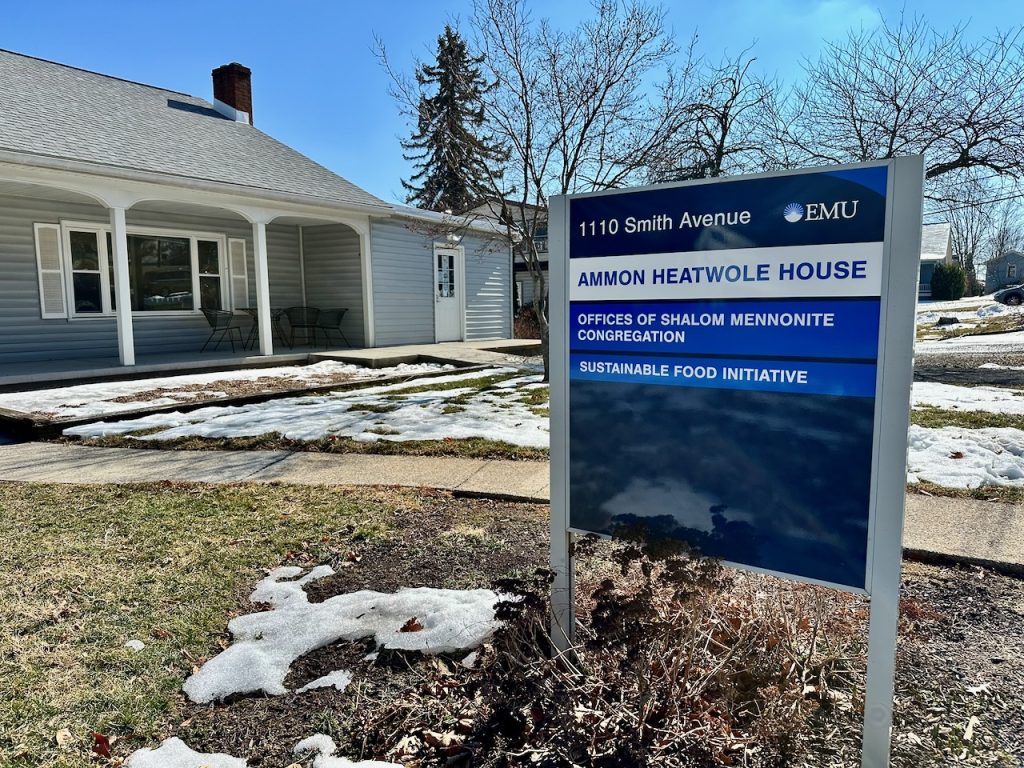
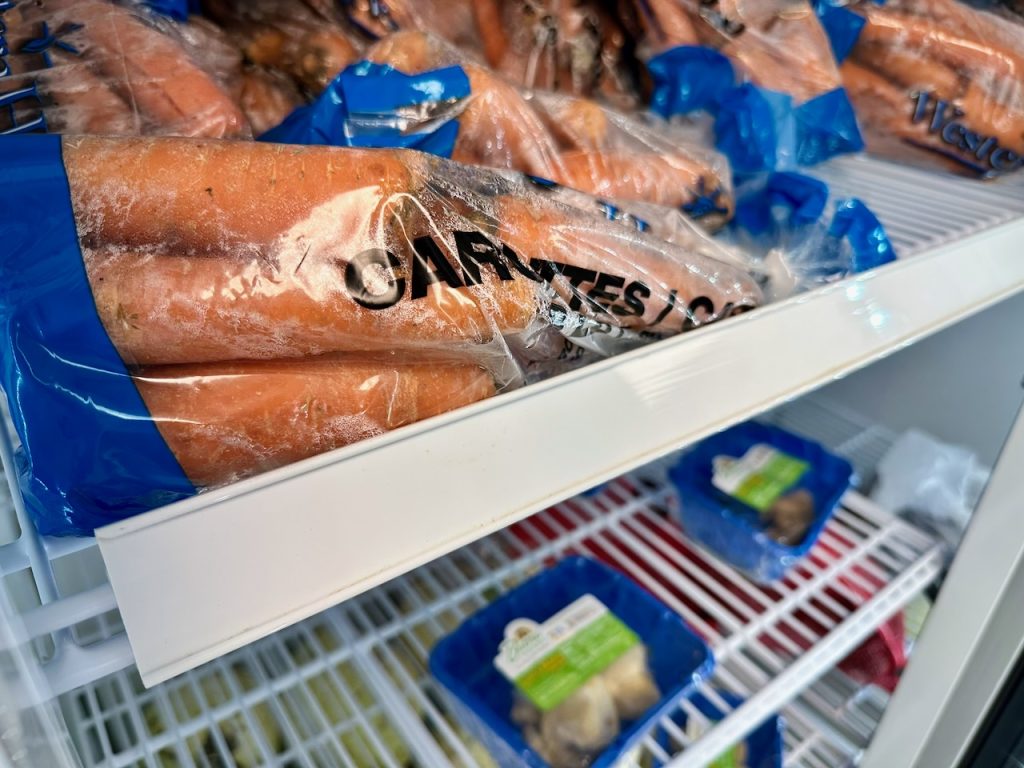
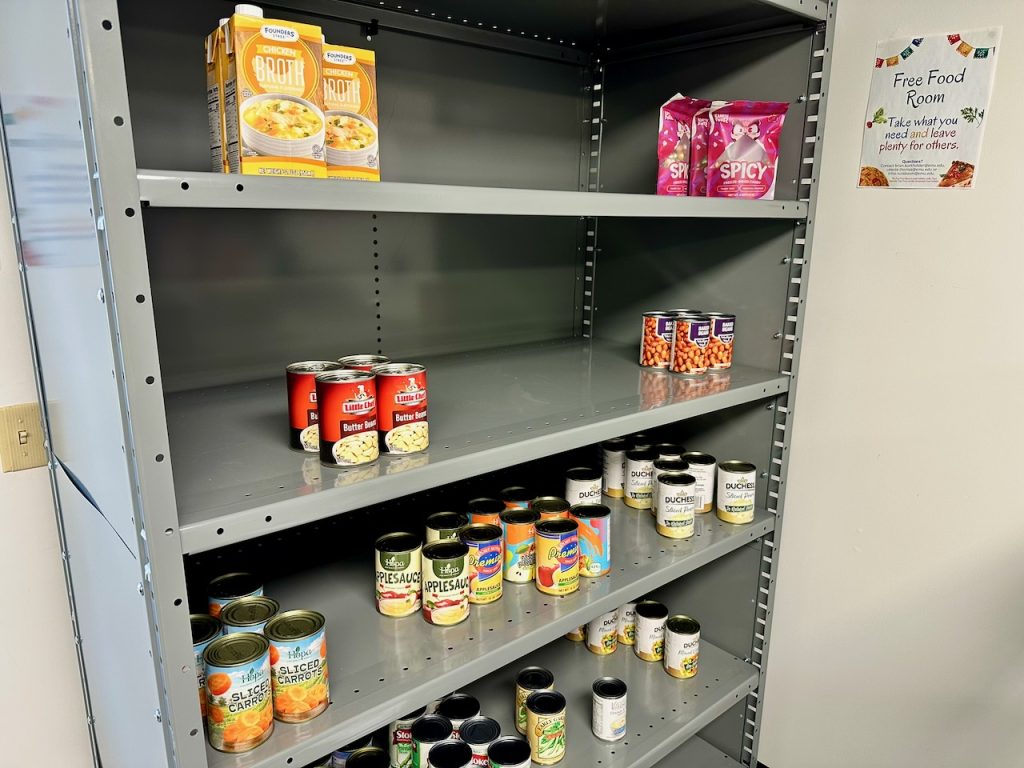
| The Free Food Room, located at the south end of Ammon Heatwole House II at 1110 Smith Ave., provides frozen meals, fresh produce, dry goods, canned items, and personal hygiene products for EMU students, faculty, and staff members in need. Operating hours for the space are 8 a.m. to 7 p.m. daily. The Free Food Room is a joint initiative coordinated by the Food Insecurity Task Force, SEEDS (student sustainability club), and Student Life. |
Rising demand
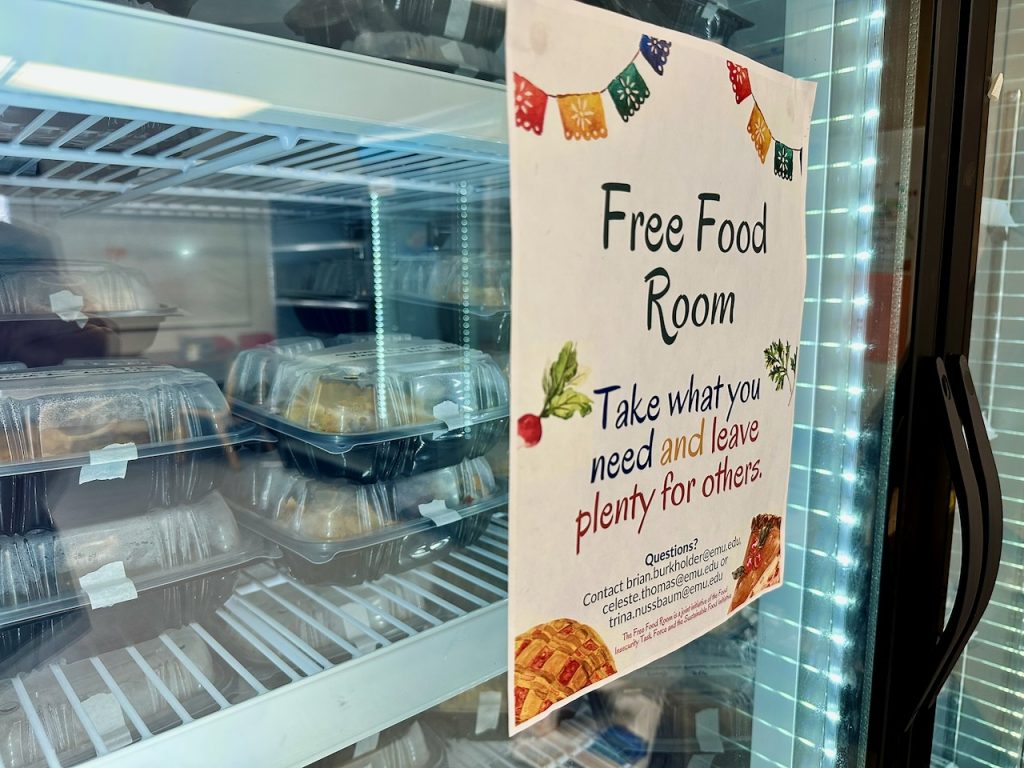
Data collected from a door counter at the Free Food Room indicates that demand has risen sharply over the past two years. Average monthly usage (August through May) was 256 visits in 2023-24 and 318 visits in 2024-25, and is projected to reach 630 visits in 2025-26.
The cost of purchasing food has risen significantly to keep pace, increasing from $189 per month in 2023-24 to $263 in 2024-25, and is projected to reach $371 in 2025-26.
Based on utilization trends and observations, an estimated 25% of EMU undergraduates experience some level of food insecurity each year, wrote Jonathan Swartz, dean of students, in a grant application. “Given this data, our best estimate is that approximately 183 undergraduate students use the food pantry each year, most of them regularly,” he wrote.
| What is food insecurity? |
|---|
| Food security refers to the level of access an individual has to a quantity of food sufficient to support healthy, everyday life. Food insecurity describes a reduction in access to a quantity of food and/or food of a quality, variety, or desirability sufficient to support healthy, everyday life. |
Partnerships and priorities
The Free Food Room has relied on the dedication of the Food Insecurity Task Force, a group led by EMU staff members Brian Martin Burkholder, Celeste Thomas, and Trina Trotter Nussbaum, as well as donations and community partnerships with the local food bank and area farms.
Current funding sources are no longer sufficient to meet demand, underscoring the importance of grant support, Swartz wrote in the application.
| Who does the Free Food Room partner with? |
|---|
| •Blue Ridge Area Food Bank: Food coalition (free food items) •VMRC Farm at Willow Run: Produce donations (non-financial) •Vine & Fig: Grant coordination (collaborative grant project providing local produce) •Gift & Thrift: Local thrift store volunteers and staff (donated food and hygiene items) “These partnerships help diversify available foods, but cannot fully meet the observed increase in demand,” Swartz said. |
Swartz said members of the task force submitted the application in mid-December, expecting to receive between $2,000 and $3,000 in funding. A month later, they learned they had been awarded $11,905.
“The Free Food Room has sustained itself but has had no significant budget, so any amount of money would’ve helped us,” Swartz said. “We’re surprised and grateful to receive almost $12,000, which will help us more strategically increase the food supply.”
| What will the funds go toward? |
|---|
| According to the grant application, priorities include: 1. Increased food supply •Cover rising costs of food purchasing. •Ensure adequate supply during high-demand periods. 2. Enhanced outreach •Develop greater impact signage, marketing materials, and orientation resources. •Target outreach to commuter, international, and first-generation students. 3. Data tracking & reporting •Implement systems to track pantry use, food weights, and student outcomes. •Improve capacity for future grant reporting and long-term planning. 4. Sustainability & infrastructure •Improvements to access and security of the space. •Purchase additional reusable meal containers. •Improve washing and sanitation capacity. |
Keeping students ‘on track’
EMU’s grant is among a total $500,000 awarded to 48 colleges and universities throughout Virginia.
According to a SCHEV release, Shenandoah Valley neighbors received the following funding: Mary Baldwin University, $14,882; Blue Ridge Community College, $11,905; Bridgewater College, $8,928; and James Madison University, $5,952.
The grants allow institutions to establish on-campus food pantries or partner with local food banks to provide food at no charge to students, the release states. In addition, grant funds can be used to increase partnerships and build more sustainable solutions for campus hunger. Funding amounts are based on the percentage of in-state Federal Pell Grant-eligible students enrolled at the institution.
“More than 40% of college students experience food insecurity at some point, which can lead to several adverse outcomes, including dropping out of school. Virginia’s investment in campus food pantries will help keep our students on track to reach their educational goals,” said Scott Fleming, SCHEV’s executive director, in the release.
The grants are funded by the Hunger-Free Campus Food Pantry Grant Program enacted by the General Assembly in 2025. SCHEV published a report on campus food insecurity in November 2024 that made several recommendations and offered resources for institutions.
Join the Discussion on “EMU receives $12K grant to address food insecurity”