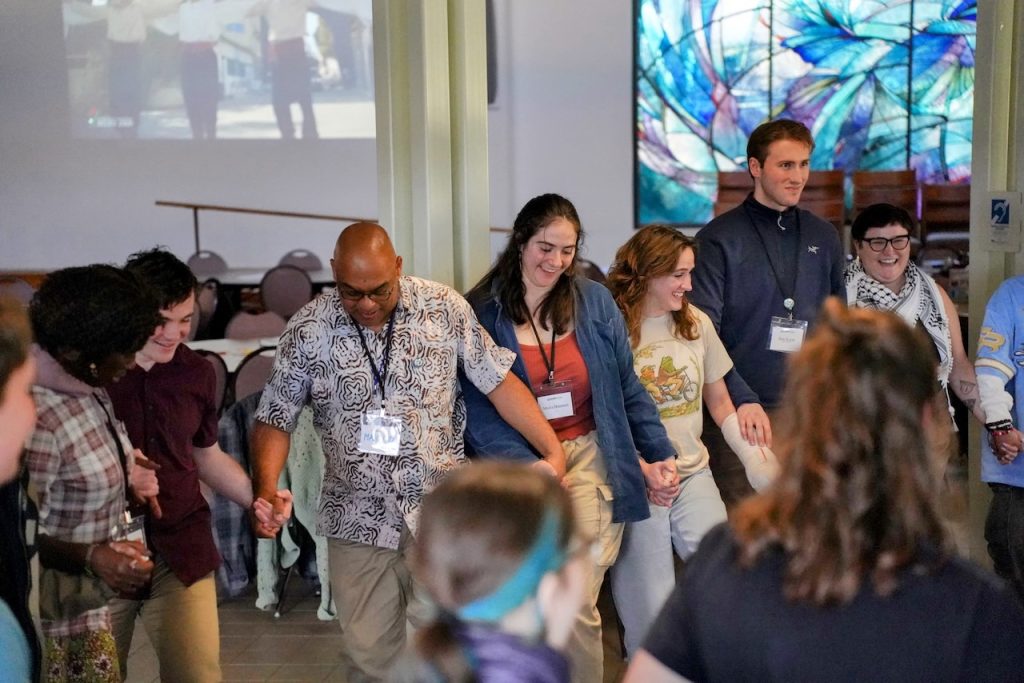
Participants from across U.S. gather at EMU to connect, learn, and grow in solidarity
The Intercollegiate Peace Fellowship (ICPF) Conference returned to EMU on March 13-15 for another year of examining issues of peace and justice. The student-led conference invites students and faculty from historic peace colleges across the U.S., including Mennonite, Brethren, and Quaker colleges, to connect, learn, and grow in solidarity together.
It was the second consecutive year EMU has hosted the once-annual conference. The university previously hosted the ICPF in 2020 before it was indefinitely put on hold due to the COVID-19 pandemic.
The purpose of the conference was to create a space where students from different campuses could come together, connect, and share the work they’re doing in their own communities, said Shawna Hurst, a sophomore elementary education major at EMU and member of the ICPF 2026 Planning Committee.
“I wanted people to leave feeling energized, supported, and equipped with new relationships and resources to continue work moving forward,” Hurst said.
“I think the conference was a success because I saw a real shift in people over the course of the weekend,” she added. “Many attendees arrived feeling defeated and discouraged by the state of the world, and while those feelings didn’t completely disappear, people left feeling less alone. There was a stronger sense of community, and many felt encouraged and re-energized by both the connections they made and the messages shared by our keynote speakers.”
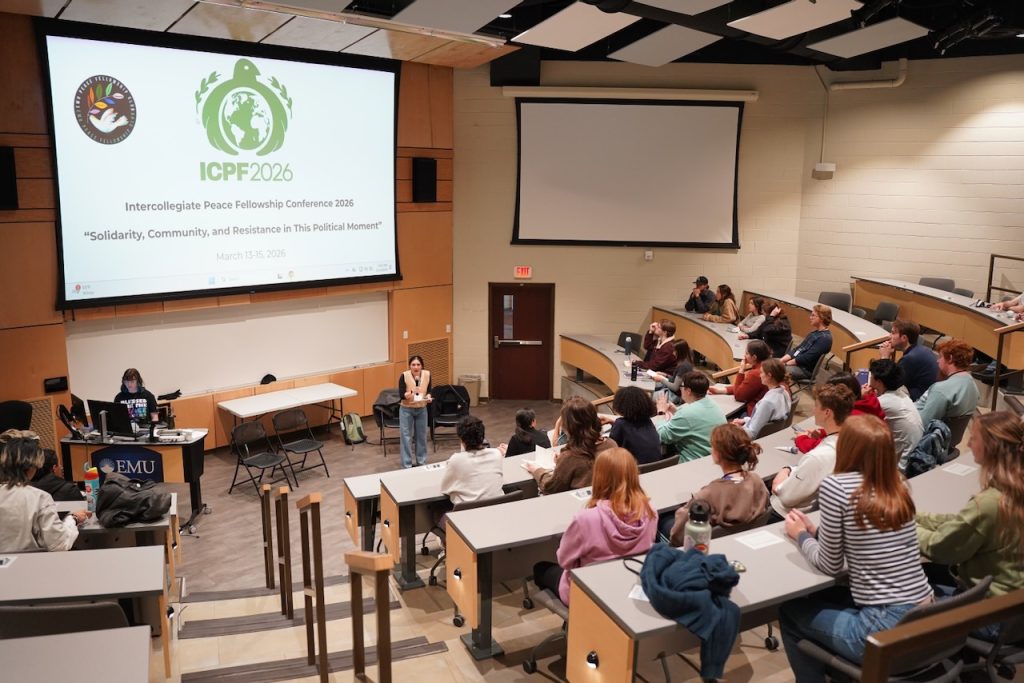
This year’s conference centered around the theme, “Solidarity, Community, and Resistance in This Political Moment,” with a focus on practical campus organizing. “In a time of extreme political division, rising fascism, and anti-intellectualism, what does campus organizing look like?” reads a description of the theme. “How can we leverage our unique heritages and cultures to better serve the broader culture and nation?”
Hurst said it was challenging to narrow down a theme because “it felt like there was so much we wanted to talk about and focus on.”
“Despite everything going on, our main goal was to bring the community, and specifically college students, together to learn ways to practice resistance and show solidarity on college campuses,” she said.
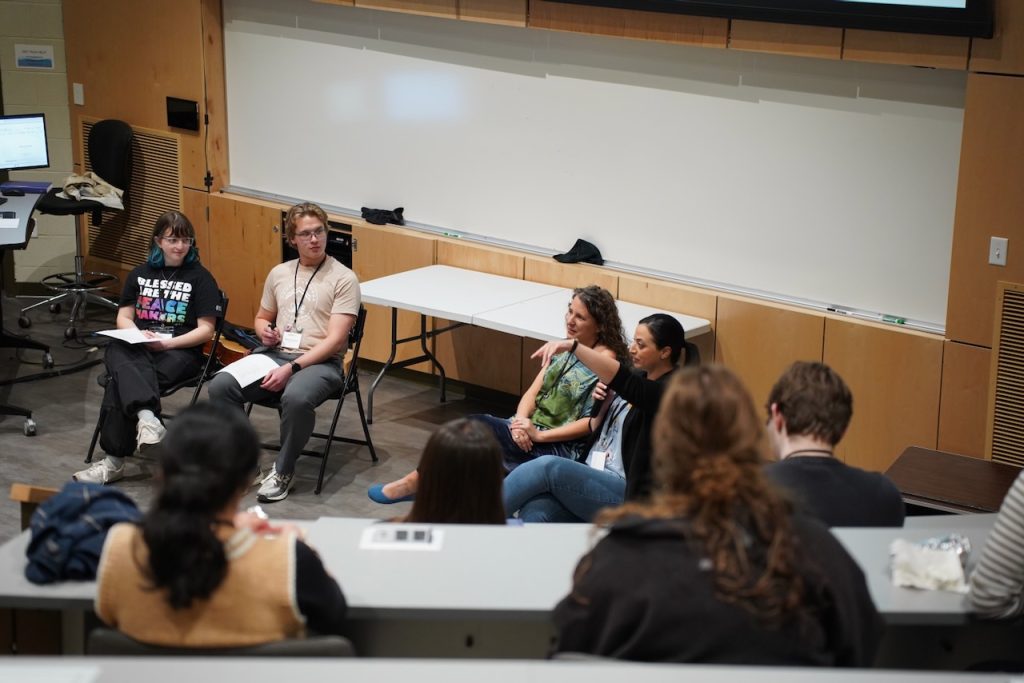
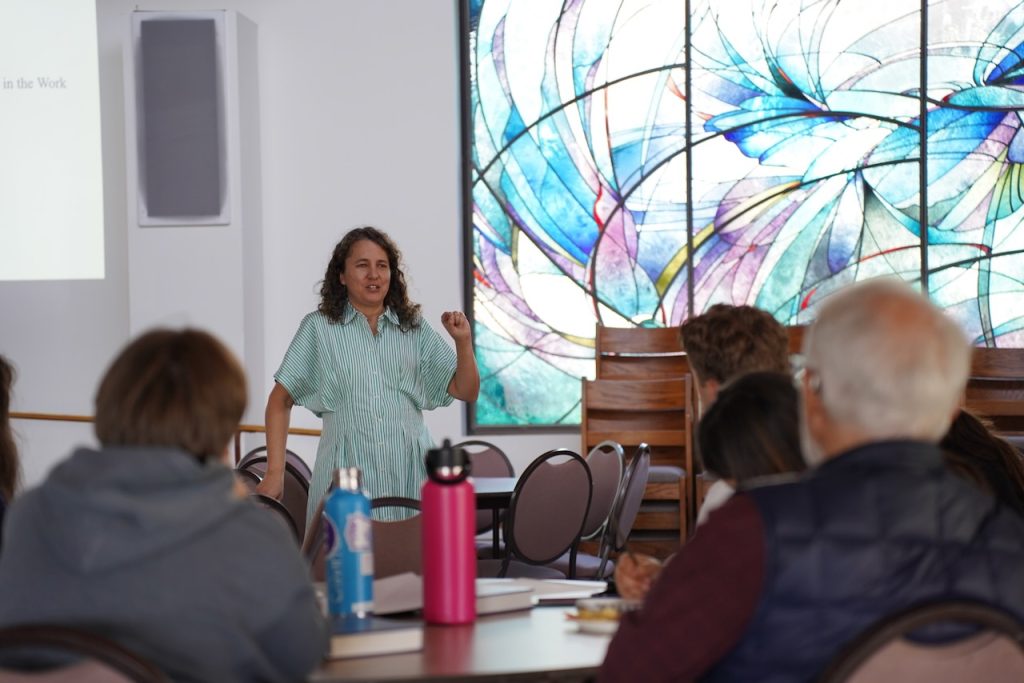
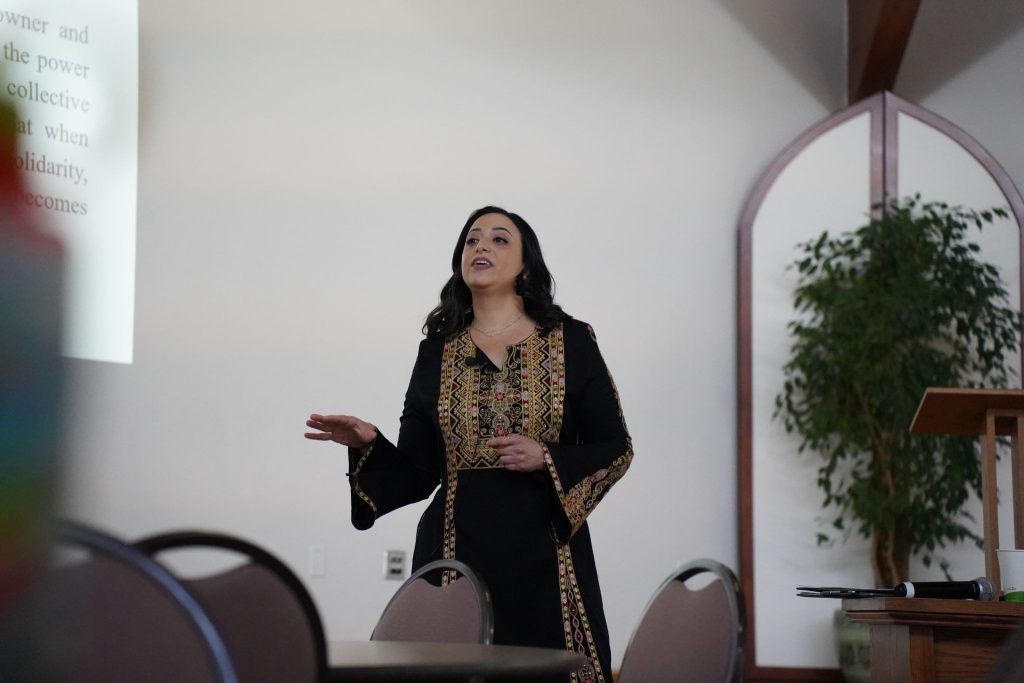
Emily Welty (left) and Nadia Dames (right) delivered keynote addresses during the conference.
The conference featured keynotes by Emily Welty and Nadia Dames.
Welty, an author and theatre-maker living in the Rockaway Beach neighborhood of Queens, New York, teaches and directs the peace and justice studies program at Pace University. She is also part of the International Campaign to Abolish Nuclear Weapons team that won the 2017 Nobel Peace Prize. Her keynote was titled, “All We Have is Each Other.”
Dames is a local business owner and community advocate in Harrisonburg who believes in the power of community, togetherness, and collective action. She delivered a keynote titled, “From Home in Harrisonburg to Roots in Palestine: Finding Your Why in the Work of Resistance.”
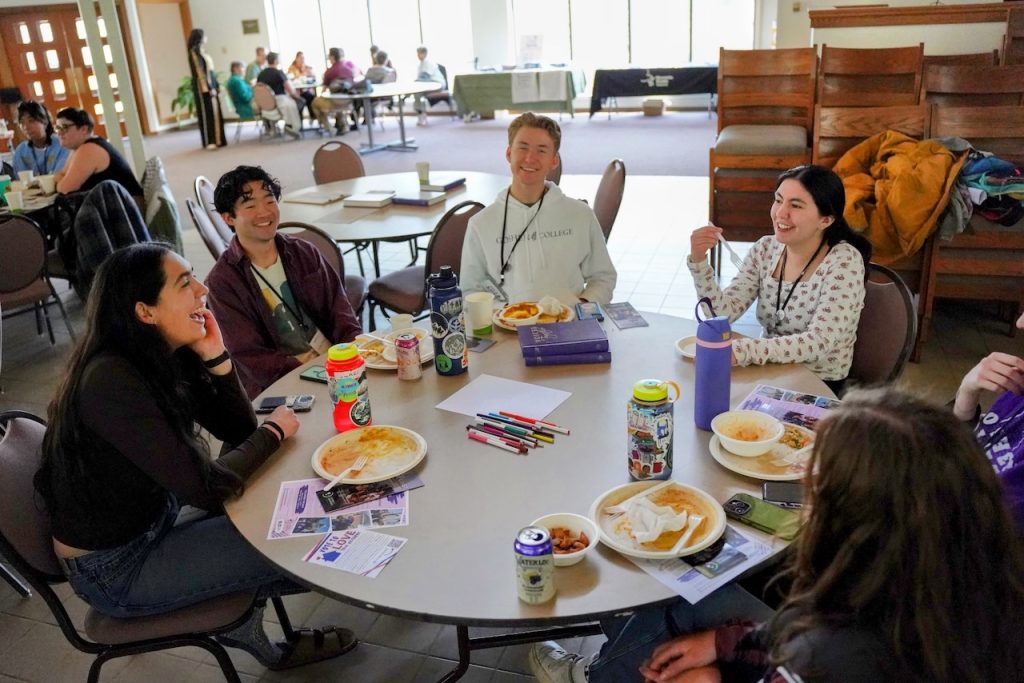
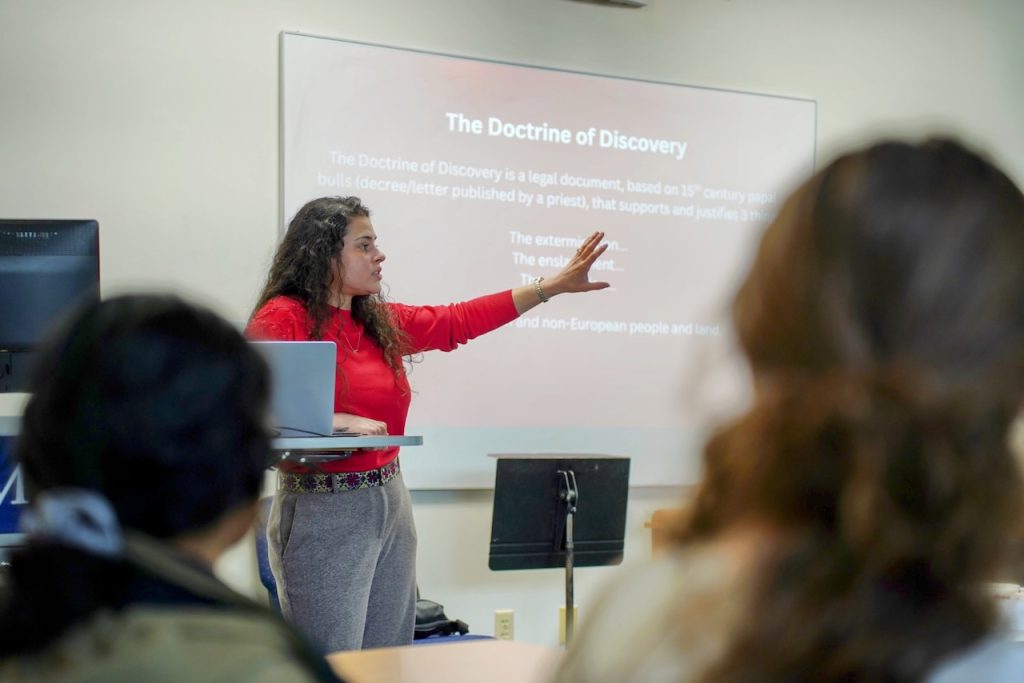
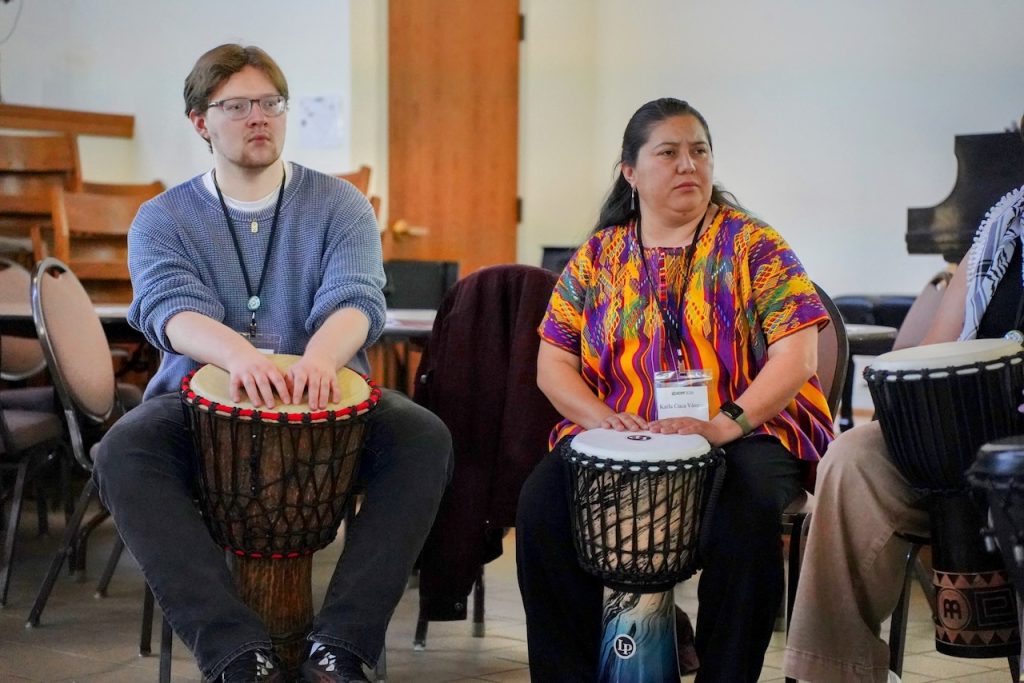
Participants share a meal (top photo) and engage in a drum circle (above right) at ICPF 2026. Alicia Maldonado-Zahra leads a workshop (above left).
Workshops were held throughout the day on March 14 in various locations around the EMU Seminary Building. Topics ranged from the epidemic of missing and murdered Indigenous people in North America to the colonization of Puerto Rico as rooted in Indigenous genocide. Other sessions offered information on careers in peacebuilding and explored how Anabaptist understandings of peace have evolved over the past several generations.
The conference also included a prayer vigil in response to the war in Iran and genocide in Gaza, an Amahoro Drumming for Peace circle led by Seminary student Makinto, and a potluck with Harrisonburg-area organizations.
“One of my favorite highlights was the Saturday lunch potluck,” Hurst said. “It was such a meaningful moment to see community members continually show up, bringing crockpots full of food to share. It created a tangible sense of care and connection that felt really special.”
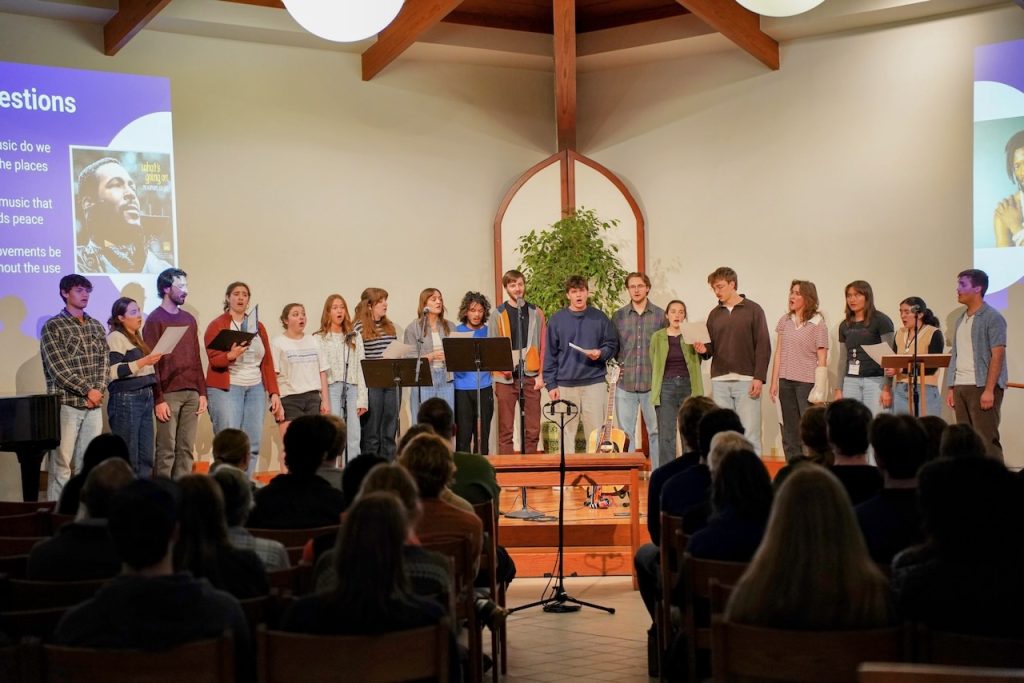
Hurst said that one moment that stuck with her happened on Saturday evening when an attendee told her this was their first experience with Mennonites. “They shared how meaningful it was to see people who care about both Jesus and justice at the same time,” she said. “Hearing that was incredibly encouraging.”
The ICPF 2026 Planning Committee included students from EMU, Goshen College, and Bluffton University: Ben Koop, Ciela Acosta, Ellie Shemenski, Logan Daugherty, Mackenzie Miller, Monica Ehrenfels, Micah Wenger, Shawna Hurst, and Dr. Timothy Seidel.
Thanks to everyone who supported and volunteered to assist with the conference, including Eastern Mennonite Seminary, the Center for Justice and Peacebuilding, the Orie O. Miller Center at EMU, Mennonite Mission Network, and the Mennonite Church USA’s Church Peace Tax Fund for significant monetary support.
Join the Discussion on “Students talk campus organizing at Intercollegiate Peace Fellowship Conference 2026”