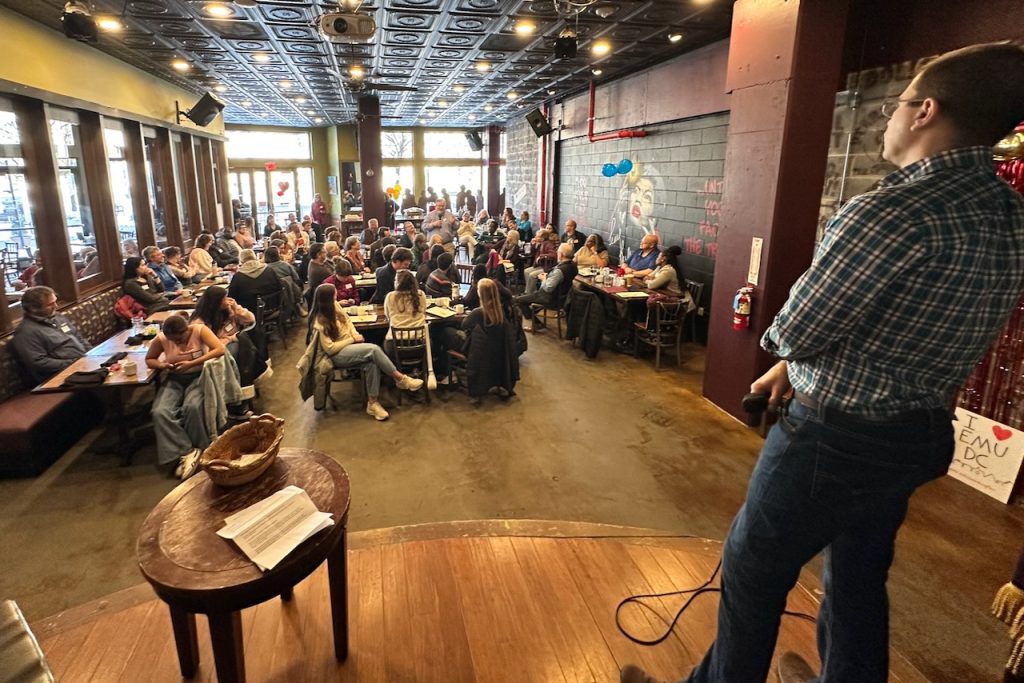
Alumni reunite to share memories, stories from their time in the program
The EMU Washington Semester program started off in the fall of 1976 as a “high-risk proposition,” recalls Phil Baker-Shenk ’79.
“It was a high risk for the college, a high risk for us individual students, and certainly a high risk for (program founder and director) Nelson Good ’68 and Arden Shank, who staffed it,” said Baker-Shenk, one of the first students in the yearlong program (then known as the Washington Study-Service Year or WSSY) from 1976-77. “It was a high risk all around, and yet people with good ideas decided to plunge in, take that risk, and make it happen.”
Fifty years later, that big gamble has paid off.
Alumni of the urban studies program—the only such program offered at Anabaptist-affiliated institutions—credit it with giving them improved professional confidence, greater clarity about career direction, more comfort in working with people different than they are, and an increased awareness of systemic injustices.
Each semester and summer, students from EMU and partner schools such as Bethel College, Bluffton University, and Goshen College converge at the Nelson Good House in the culturally diverse and multiethnic Brookland neighborhood of Washington D.C. It’s there that they learn to live in a shared community, cooking and eating meals together, managing a collective budget and household responsibilities, and navigating conflict with maturity.
Students gain real-world professional experience in their chosen field of study through internship placements, study the history and social dynamics of the city, and immerse themselves in the rich culture and vibrancy of the nation’s capital.
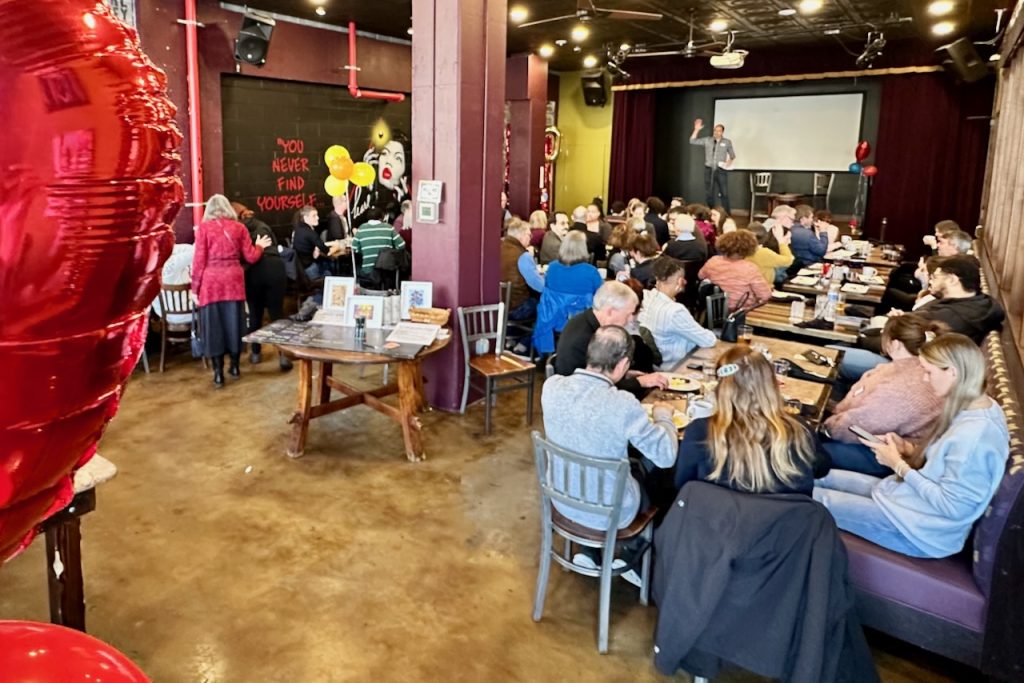
Baker-Shenk was among the 60 alumni and supporters of the EMU Washington Semester, from its beginnings in the 1970s through today, who gathered at the Busboys and Poets restaurant in Brookland on Saturday, Feb. 14, to share their memories and experiences from their time in the program and celebrate its 50-year legacy. The milestone reunion included remarks from Program Director Ryan Good, EMU Interim President Rev. Dr. Shannon W. Dycus, Provost Dr. Tynisha Willingham, and many students and alumni from the past five decades.
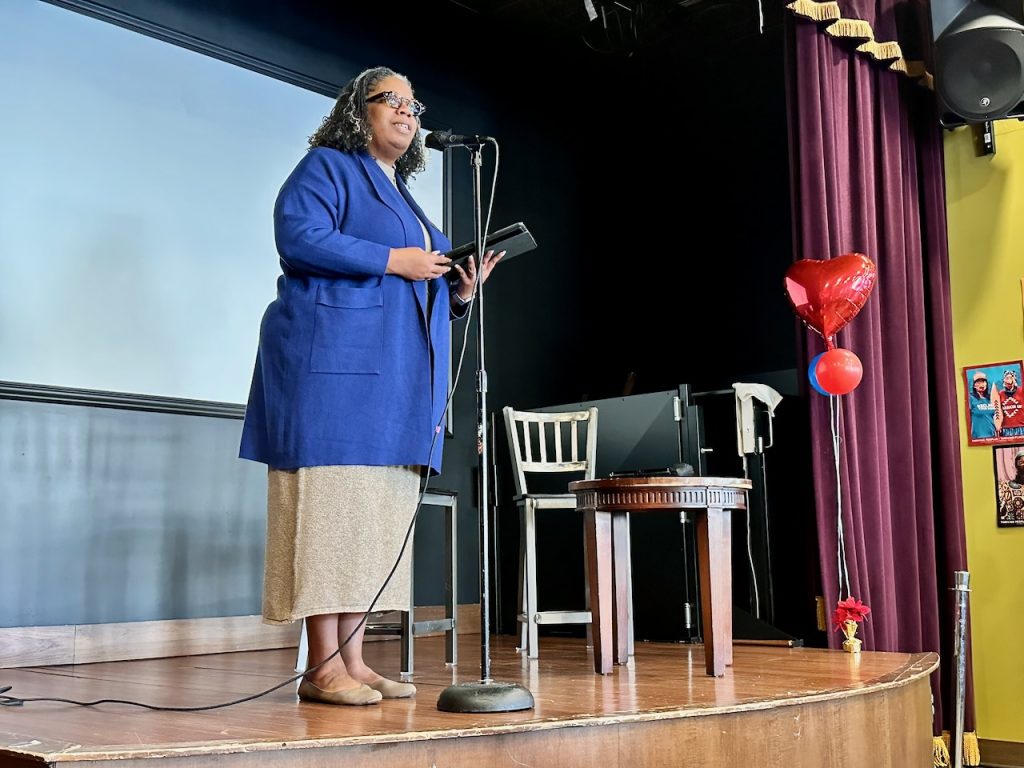
Since its inception, more than 1,000 students have called the program home for a season of their lives, said Dycus. They’ve taken courses at and built relationships with institutions such as Catholic University of America and Howard University. And students have learned to live with difference, practice shared leadership, and carry conviction into real work.
“We’re celebrating a living, evolving experiment in education,” Dycus told the crowd. “One that has asked generations of students to take learning seriously enough to put it to work. Since 1976, this program has woven together community living, academic study, and vocational reflection right in the complexity of our nation’s capital.”
As the story’s been told, shared Dycus, Nelson Good came to D.C. as a conscientious objector during the Vietnam War era. “And, out of that experience, he helped build a program committed to servant leadership and social justice, and an education shaped by peace, responsibility, and courage to see the city as it is.”
Nelson Good directed the program until his retirement in 1987, mentoring it through major transitions. When the time came to find a new home closer to public transportation and academic partners, he personally helped find and secure the building at 836 Taylor Street that became the Nelson Good House.
“He did that work even while facing a cancer diagnosis and died a few months before the facility’s dedication (on Aug. 20, 2005),” Dycus said.
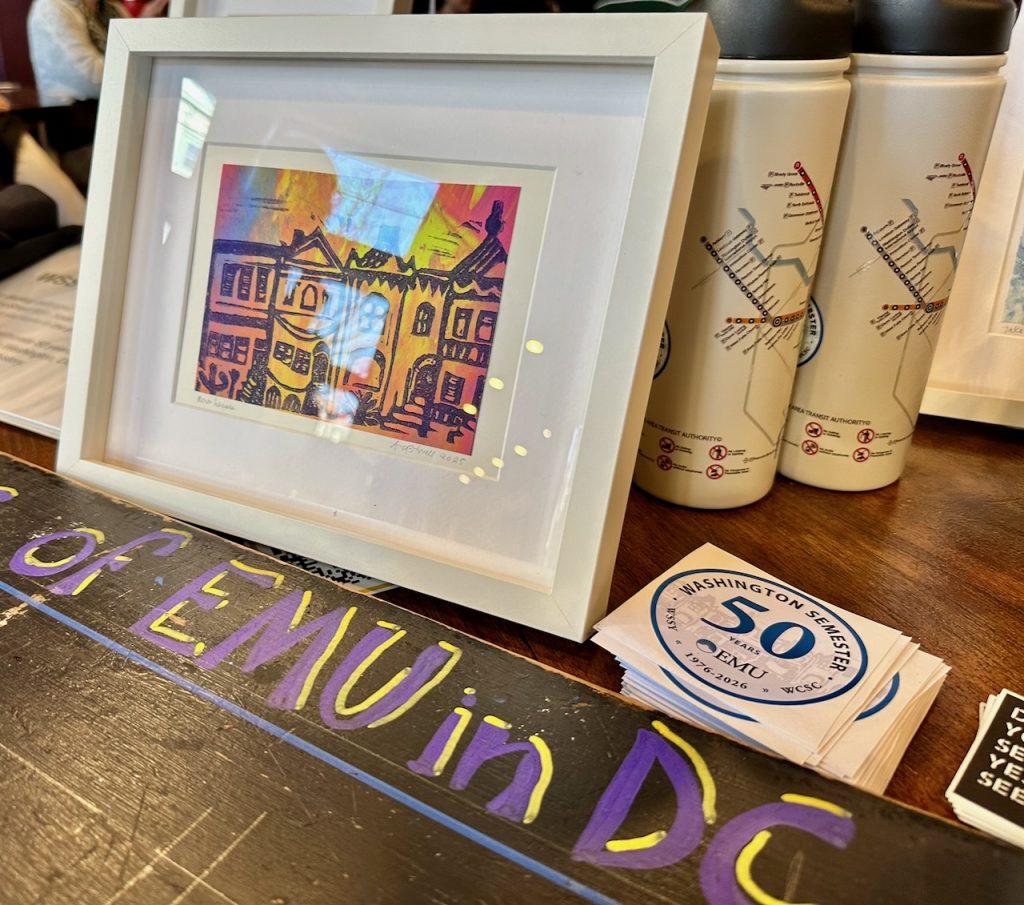
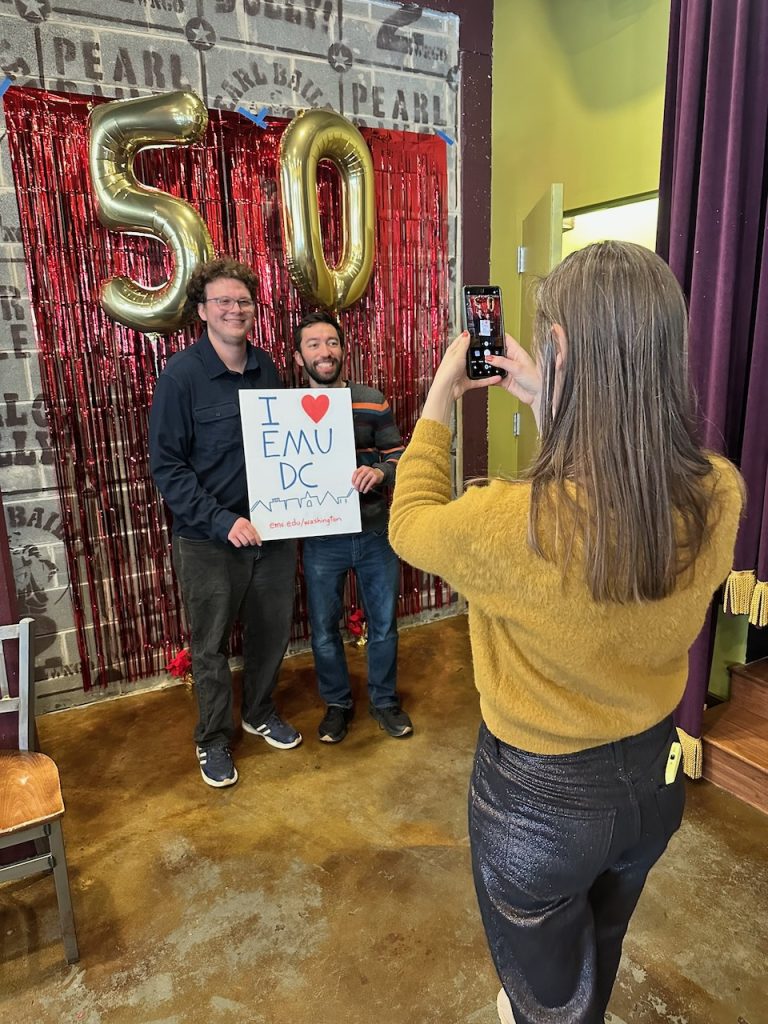
Alumni of the EMU Washington Semester gather to celebrate the program’s 50-year legacy.
The EMU Washington Semester offers a built-in social and professional network for its alumni, many of whom find long-term careers in D.C., thanks to the web of connections and relationships they build through the program.
Aerlande Wontamo ’06 was among the first cohort of 15 students to live at the Nelson Good House during the spring of 2006. She interned at the Ethiopian Community Development Council while taking classes at Howard University.
“It was such a meaningful experience for me because I got on (Howard’s) campus and I looked like everybody else,” said Wontamo, who is originally from Ethiopia. “There was another person in our group, I think from Goshen, who was also at Howard, and she was white. We would go to school, and that was the first time she felt like a minority. It was this wonderful experience for both of us.”
Like many alumni of the EMU Washington Semester (it was known as the Washington Community Scholars’ Center or WCSC after 2002), Wontamo stayed in the city. Twenty years later, the economic development grad is still working in the refugee and immigrant services field as senior vice president of U.S. programs for World Relief, a global Christian humanitarian organization.
“It was my internship that was such a meaningful experience for me and led me through all of the steps to get to where I am,” she said. “So, I’m a huge fan of the program.”
Anisa Leonard ’21, a social work grad originally from Kenya, interned at Voices for a Second Chance, a nonprofit dedicated to supporting individuals returning home from incarceration, during her spring 2021 semester in the program.
“The WCSC program was absolutely foundational in getting me to where I am now,” said the social worker. “It sparked my interest in working with people who are marginalized in so many ways, especially in a city so impacted by race and gentrification.”
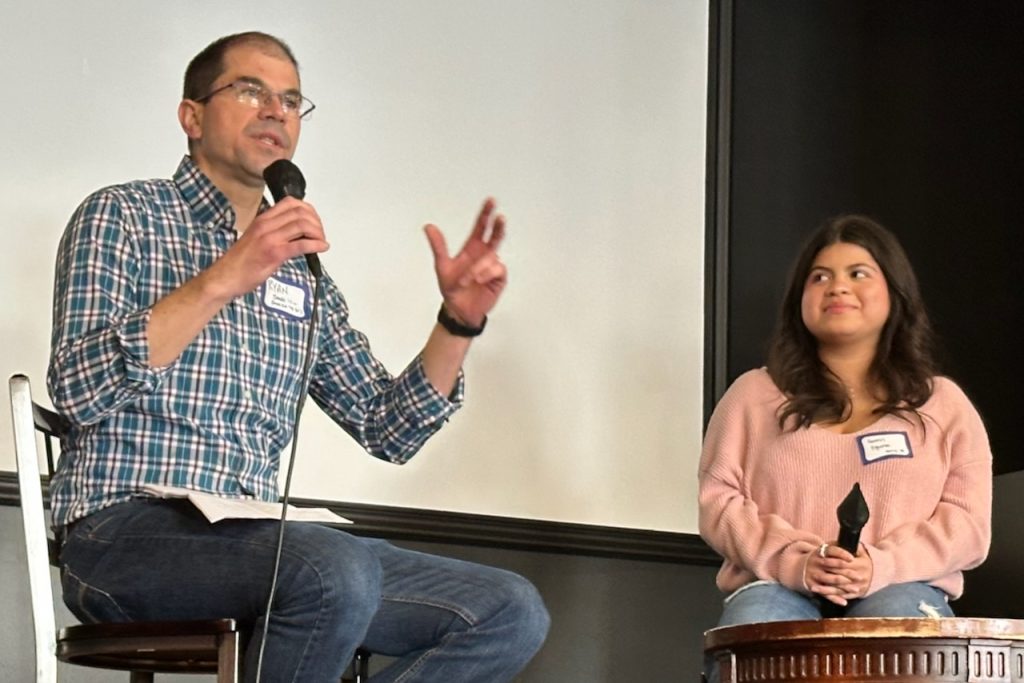
Genesis Figueroa joined Ryan Good on stage for a conversation, reflecting on her experiences in the program during spring 2025. The EMU senior, who is double majoring in political science and Spanish, interned at Catholic Charities in its immigration legal services department, where she provided translation, interpretation, and administrative work. She said she hopes to become an immigration lawyer.
“It definitely solidified what I want to do after college and what type of work I want to do,” she said. “It solidified my passion for it.”
Another EMU senior, Dia Mekonnen, remembered living at the Nelson Good House with 13 other students during summer 2025. “It was really packed,” she said. “But it was really nice to connect with them. It was nice to cook together, to be able to share our perspectives, and we still hang out.”
Baker-Shenk credited Nelson Good, along with many other heroes, with the courage and vision to implement and sustain the idea of the D.C. program over the years.
“One of the many things he taught me, and it was a little hard for me to take back in the ’70s, was that institutions deserve our love and our commitment and our care,” he said. “Fifty years later, here’s an institution that has carried each of us in this room in one way or another, and it happened because it was nourished and encouraged.”
| Hear what others had to say |
|---|
| At the same time, said Dawn Longenecker ’80, who was in the second cohort of the D.C. program (1977-78), Nelson Good also taught students to challenge institutions. “I think he created WSSY as an alternative to the institution that we were all a part of at EMU,” she said. “It was an alternative place where you could come to the city and really struggle with the systemic forces that were out here, that are still out here, that are wreaking havoc.” |
| Provost Dr. Tynisha Willingham called the D.C. program a distinctive of the EMU experience: “We’ve been able to partner with other universities because so many have moved away from doing this work in the city. But yet, we continue to do the work. We continue to support students. And we continue to place our students in organizations that are changing the landscape of not just D.C., but also the world.” |
| Since 2018, Bianca Ward, who has primarily worked in public health and HIV outreach, has met with students in the program to speak about her vocational journey and hear about their experiences, hopes, and dreams. “We talk about self-care, social justice, and all of these things, and every time I leave, I am inspired by what’s happening in that space,” she said. |
| Others attending the reunion included Professor Emerita Dr. Kimberly Schmidt, who directed the program for 22 years; former assistant director Doug Hertzler ’88; and former staff member Cynthia Lapp ’86. |
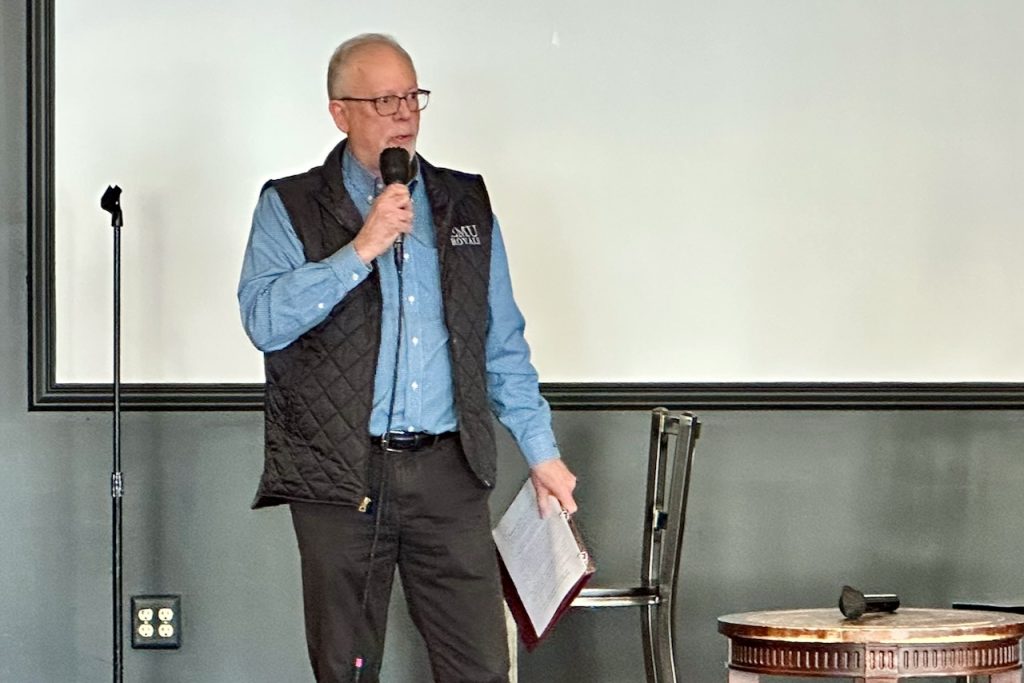
Kirk Shisler ’81, vice president for advancement, is a proud member of the third cohort of students in the program (1978-79). He told guests there were many ways to support the program. One such opportunity is through the Dr. Kimberly Schmidt Endowed Scholarship, which was dedicated during the program’s on-campus reunion at Homecoming 2025.
“Financial aid is such a critical part of the story for every student, and it’s an obstacle,” he said. “It’s an obstacle to participation in this program and others. And so what we can do to mitigate that through donor-funded aid is an opportunity we want to focus on.”
Learn more about the EMU Washington Semester at emu.edu/washington.
Read more:
- Sept. 2025: Rebranded EMU Washington Semester celebrates 50 years of career-building and community
- Nov. 2016: Forty years of service and learning celebrated at WCSC’s Nelson Good House
- Aug. 2015: Washington Community Scholars’ Center celebrates 10 years at the Nelson Good House in Brookland
- March 2014: The history of the Washington Community Scholars’ Center
Join the Discussion on “‘A living, evolving experiment in education’: D.C. program turns 50”