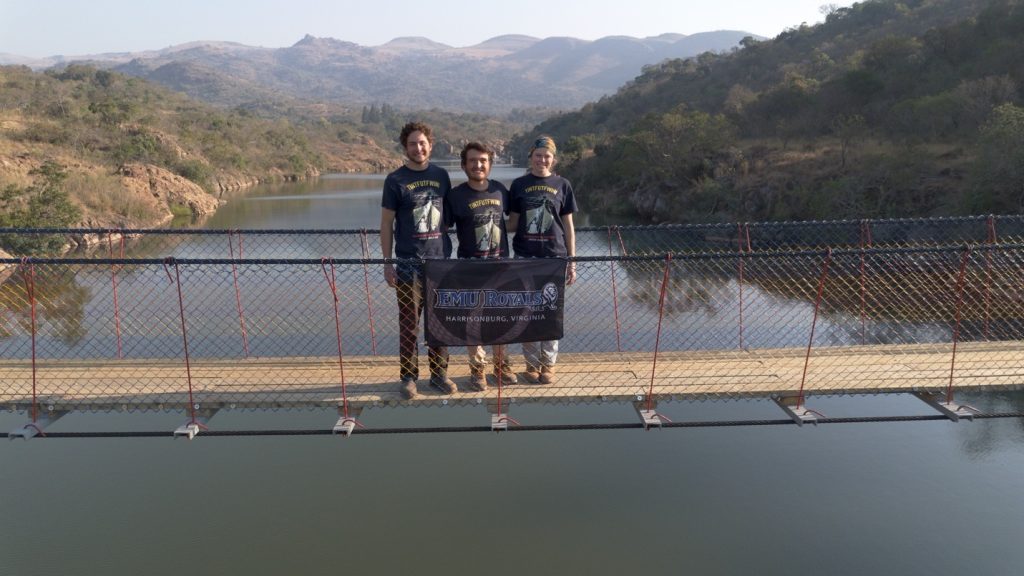
EMU engineers spent their summer linking communities in Eswatini, Africa, through a new footbridge
During the rainy season in Eswatini, the Nkomazi (Komati) River floods, submerging the low-lying footbridge used by residents of the rural kaNdeva and Hlalakahle communities and making it impassable.
For decades, the footbridge was the only way for the roughly 1,500 residents of those communities to cross the river and access the markets, healthcare clinic, and church on the other side. Schoolchildren, who relied on the bridge to get to school, often waited three to four weeks for the river to lower before they could safely cross and return to class.
The aging bridge had fallen into disrepair. Wide gaps between its weathered wooden planks, which dangled just above the surface of the river, made crossing dangerous. Its tattered fencing also posed a risk.
“And it swings and sways terribly,” said one local mother in a video about the bridge. “We have feared that our children will fall into the river.”
That all changed this summer when a group of EMU students and alumni joined university students from Iowa, Western Ontario, and Rutgers, staff from the Engineers in Action (EIA) nonprofit, and engineers and contractors from Eswatini to design and build a new suspended footbridge across the river.
The 300-foot Tintfutfwini Bridge, located about 65 feet upstream from the old bridge, can be safely used year-round and can hold more than 88,000 pounds. It crosses the river more than a dozen feet above the high-water mark, about 15 feet higher than the old bridge.
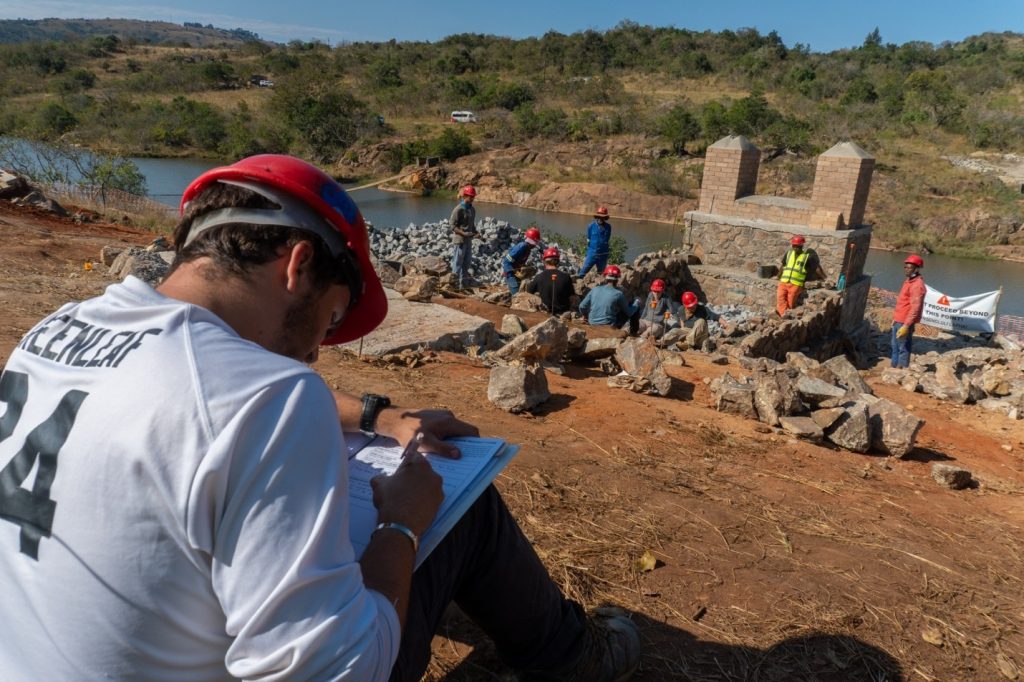
EMU senior Isaac Greenleaf fills out paperwork as members of the bridge-building team construct one of the new footbridge’s stone-and-brick towers along the Nkomazi (Komati) River in Eswatini. The old footbridge can be seen in the background.
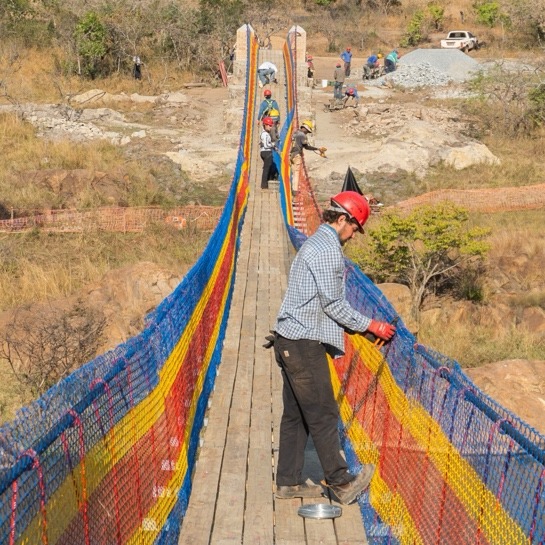
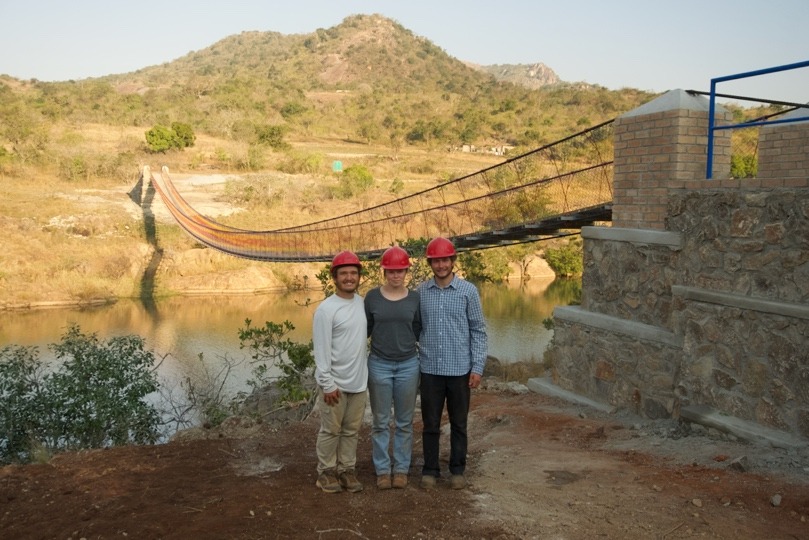
LEFT: Levi Stutzman ’26 helps install the colorful fencing along the new suspended footbridge across the Nkomazi (Komati) River in Eswatini. RIGHT: Left to right: Isaac Greenleaf, Moravia Satterfield, and Stutzman stand beside the newly completed bridge.
Students Isaac Greenleaf and Moravia Satterfield, who are members of the EMU Bridge Builders club, and engineering alumnus Levi Stutzman ’26 spent nearly eight weeks, from May 25-July 17, completing the project in the Hhohho region of Eswatini. The landlocked country is bordered by South Africa and Mozambique and, until 2018, was known as Swaziland. They also received mentorship from alumni bridge builders Luke Wheeler ’23 and Mana Acosta ’25, on-site Bridge Corps members with EIA.
While working on the project, the students lived at the primary school and formed connections with local residents. On weekends, they attended youth soccer games and participated in community events.
Satterfield, a sophomore engineering major from Ashland, Missouri, and the project’s safety manager, said a celebration after the bridge was completed featured dancing, speeches, and a ceremonial crossing by residents and a member of parliament.
“A lot of people were really excited about this bridge,” she said. “They told me they had been waiting for this moment for the past six years.”
Greenleaf, a senior applied math, computer science, and engineering major from Lancaster, Pennsylvania, served as project design manager. He said the experience reaffirmed his passion for engineering.
“This is such a great opportunity to help people who need it the most, and to be able to use the skills I have for that purpose is just great,” he said. “I’m happy that all this hard work I’ve put in will help people of this community for 50 years and more.”
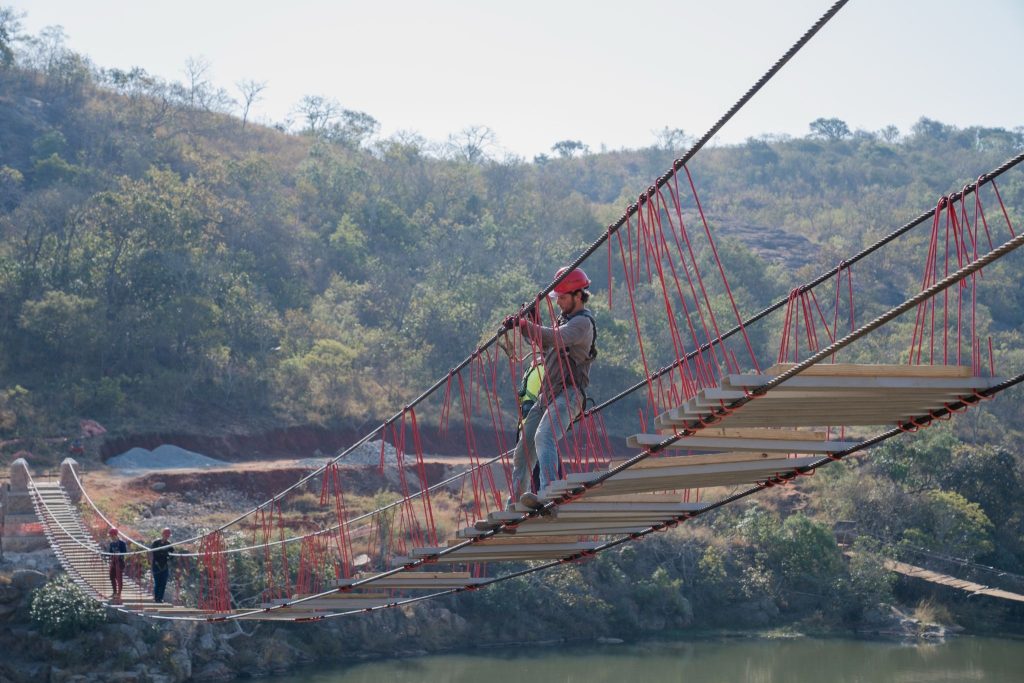
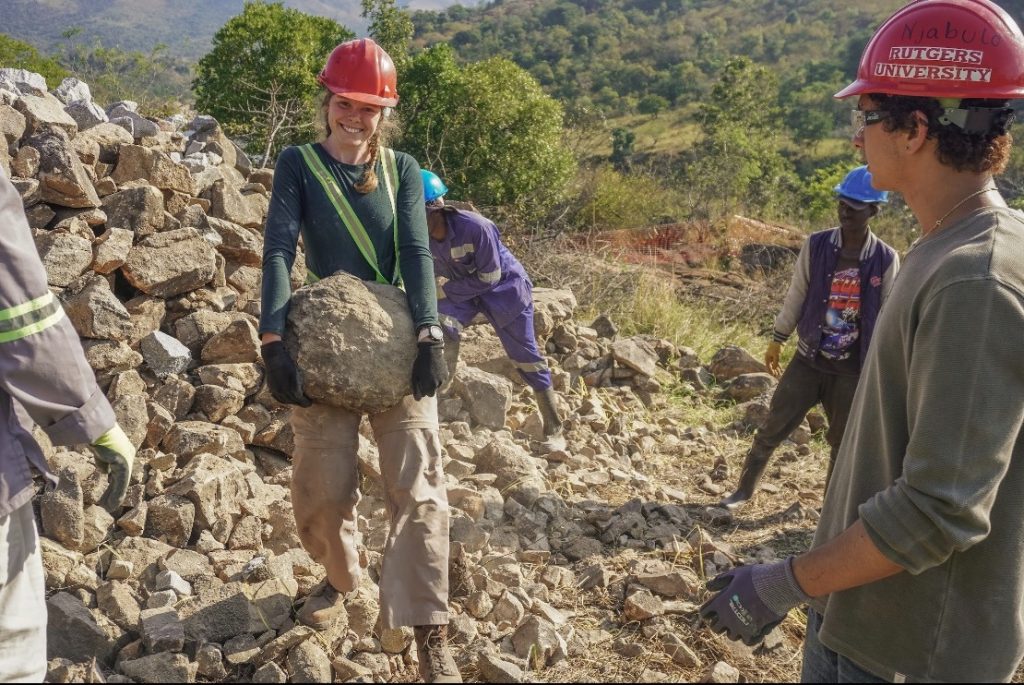
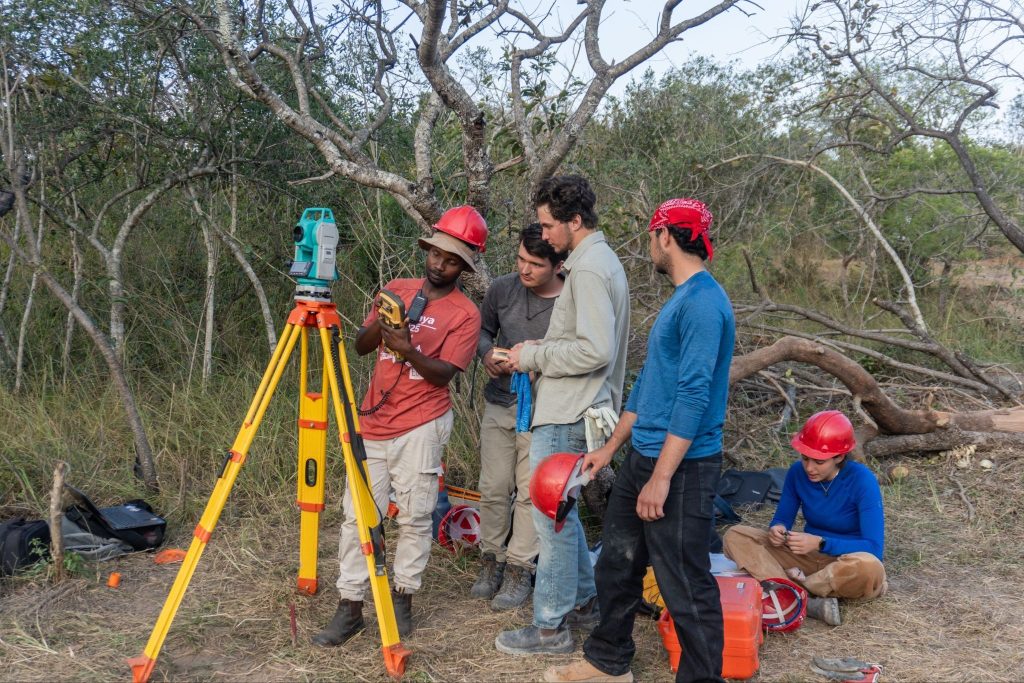
EMU engineering students and alumni help construct the footbridge in Eswatini, Africa, this summer.
The project brought together the students’ engineering knowledge with the construction expertise of professionals from the surrounding communities, including four masons and a site coordinator.
“They had the physical skill and knowledge to build this bridge and we had the funding and engineering experience,” Greenleaf said. “It was a very collaborative project.”
That collaboration also means local residents understand how the bridge was built and can make repairs when needed.
The project taught Greenleaf how quickly engineers have to adapt when problems arise. Shortly after arriving at the site, the team discovered that groundwater had flooded the bridge foundation. Students and engineers dug trenches to drain the water.
“A lot of things can go wrong on a construction site,” Greenleaf said. “It was nice to get real-world experience that I wouldn’t get in a classroom so I can learn about some of those issues and how to work through them. It’s nice to get that experience designing something and seeing how it actually gets built.”
Satterfield, a recipient of EMU’s National Science Foundation S-STEM Scholarship, agreed. She said the experience sparked an interest in global development engineering projects.
“Seeing the bridge from beginning to completion was a really valuable experience,” she said. “I got to see it at every stage and we were able to help with all of it. It was a very hands-on process.”
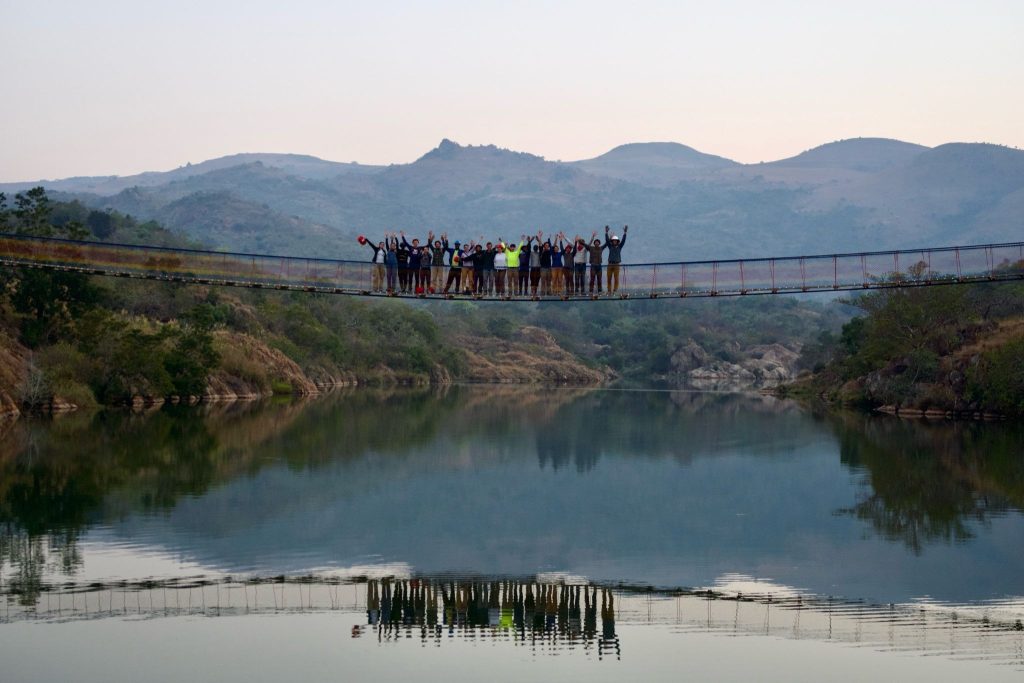
Members of the bridge-building team celebrate the completion of the new suspended footbridge across the Nkomazi (Komati) River in Eswatini.
Stutzman, an engineer with JZ Engineering in Harrisonburg, served as project manager. He had helped build another bridge in Eswatini in 2024, during his sophomore year at EMU. Some of his favorite memories from this latest trip involved building relationships with residents and schoolchildren.
“We got to play netball with the kids and give them shoulder rides and eat and play with them,” he said. “We spent a lot of time with the people who are actually going to use the bridge every day.”
In January, Stutzman will return to Eswatini to spend a year working as a bridge fellow with Engineers in Action. EMU will likely send another group there in summer 2028.
The EMU Bridge Builders club, a chapter of Engineers in Action, collects donations throughout the year to support its work with projects like this one. Support the club and its cause by giving online here.
Watch a video of the bridge project below!
Read more:
Eswatini Daily News: “Nkomazi River Footbridge handed over”
Join the Discussion on “They’re bridge builders, literally”