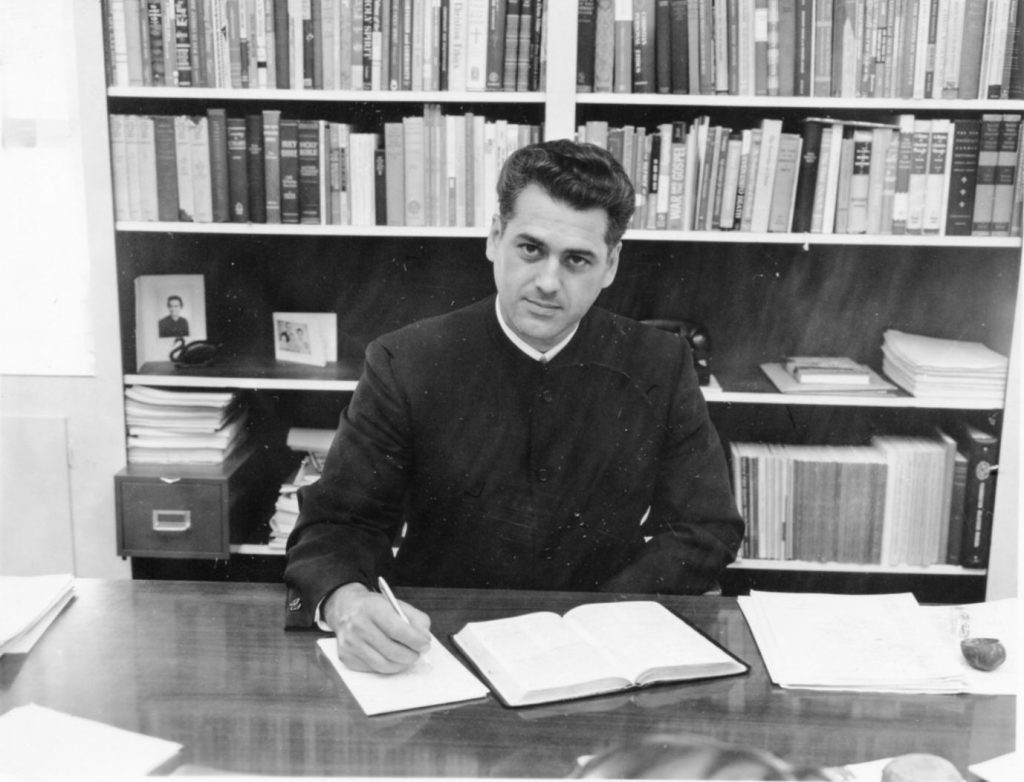
As EMU’s president from 1965-80, he transformed the institution into a nationally recognized liberal arts college and seminary
Dr. Myron S. Augsburger BA ’55, BTh ’58, a nationally known evangelist, theologian, Mennonite pastor, and prolific author who led EMU as its fifth and youngest president from 1965-80, died on Oct. 15 at age 97. He is remembered by generations of students and colleagues, family members, and friends for his gifts as a speaker and preacher, his passion for leading and engaging with people, and his conservative theology and progressive politics during a turbulent era of war and civil rights activism.
Augsburger had lived at Virginia Mennonite Retirement Community in Harrisonburg since 2019. A memorial service will be held on Dec. 12 in Lehman Auditorium. Read his obituary here.
During his 15-year tenure as president of EMU, then known as Eastern Mennonite College and later as Eastern Mennonite College & Seminary, Augsburger oversaw a period of remarkable institutional growth. Enrollment nearly doubled, from 617 students in 1965-66 to 1,088 in 1979-80, as the school expanded its academic programs and campus facilities.
“He gave passion to the office,” a description of his presidency reads. “Drama, instrumental music, intercollegiate athletics, and international study developed dramatically. Under Augsburger’s leadership, EMC created an innovative, team-taught core curriculum entitled ‘Christianity and Civilization’ and known as IDS (for Interdisciplinary Studies).”
Historian Dr. Donald B. Kraybill ’67, in his centennial history, Eastern Mennonite University: A Century of Countercultural Education (The Pennsylvania State University Press, 2017), describes the IDS curriculum as a “rare” and “massive undertaking” that integrated the Christian faith into the liberal arts.
“It proved we were not an educational program with a little religion tacked on the edges like many colleges,” Augsburger said at a presidential forum in 2017. “We had seven courses, each taught by five professors from five disciplines who modeled integrated Christian faith with each discipline and how they overlapped.”
Augsburger speaks about the development of the IDS curriculum in the video below.
“That [curriculum] eventually gave birth to cross-cultural studies,” said the Rev. Dr. Phil Kniss ’82, MDiv ’95, Augsburger’s nephew and a former pastor of Park View Mennonite Church. “Things like that really helped to put EMU on the map, instead of being just a quiet church-oriented school.”
The Rev. Dr. Loren Swartzendruber ’76, MDiv ’79, EMU president from 2003-16, credited Augsburger with extending the university’s reach beyond the Mennonite world and helping it become part of a larger Christian ecumenical conversation.
“He, in my estimation, has to rank among the top two or three most influential Mennonite leaders of the past century,” he said.
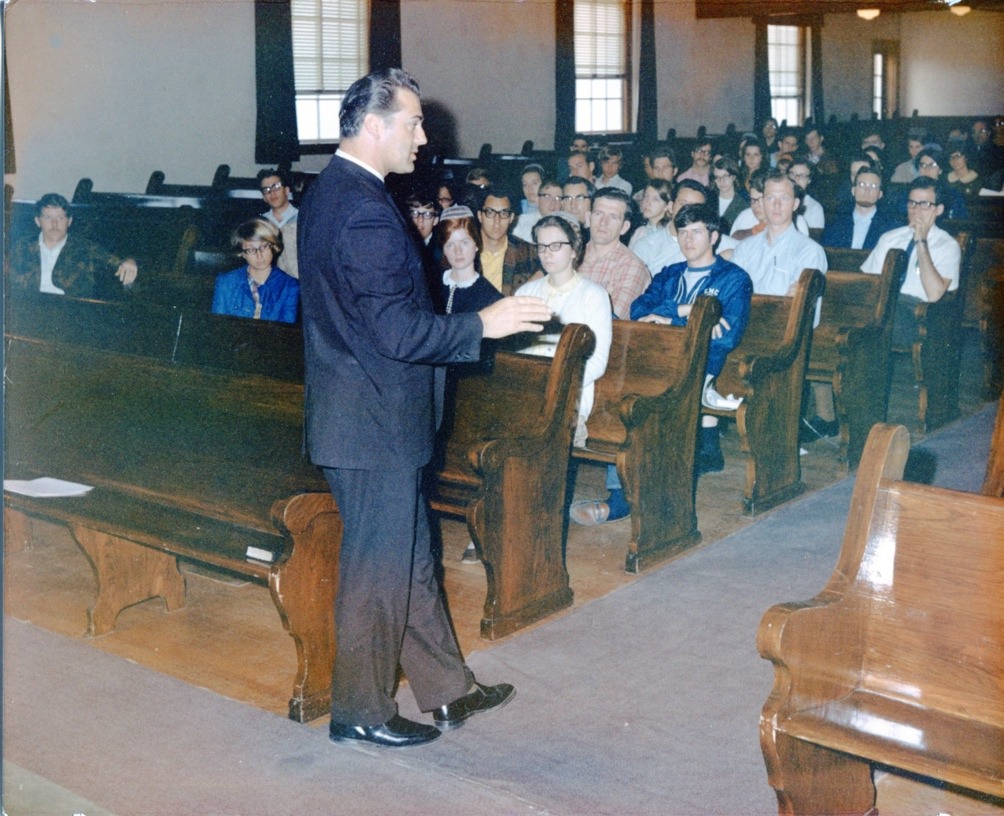
An era of transformation
The early years of Augsburger’s presidency were “a huge time of upheaval in the United States, culturally,” said Simone Horst ’12, special collections librarian & archivist.
“When I think of Myron as a president, I would say he was really visionary,” she said. “He didn’t just want to keep EMU as it had been. He wanted it to grow.”
The two biggest building projects during his presidency were the domed, state-of-the-art facility later named Suter Science Center, built in 1967, and the building that later became Hartzler Library, built in 1971. EMU also built the Roselawn (1967) and Oakwood (1969) residence halls and the Discipleship Center (1974), and completed a major renovation of Lehman Auditorium in 1975.
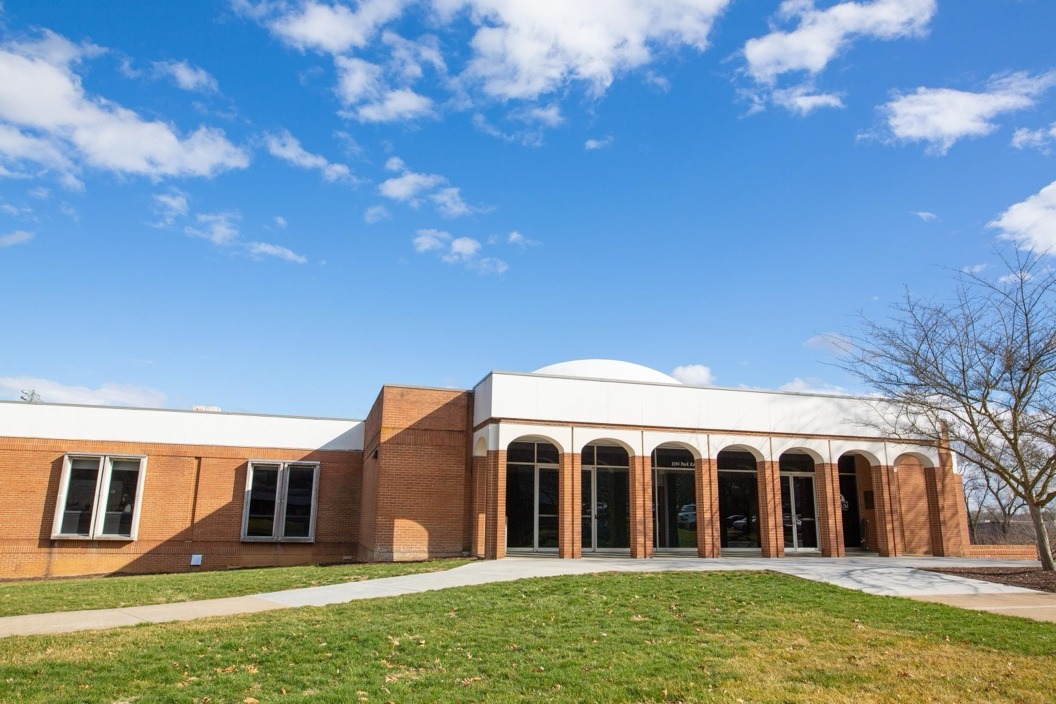
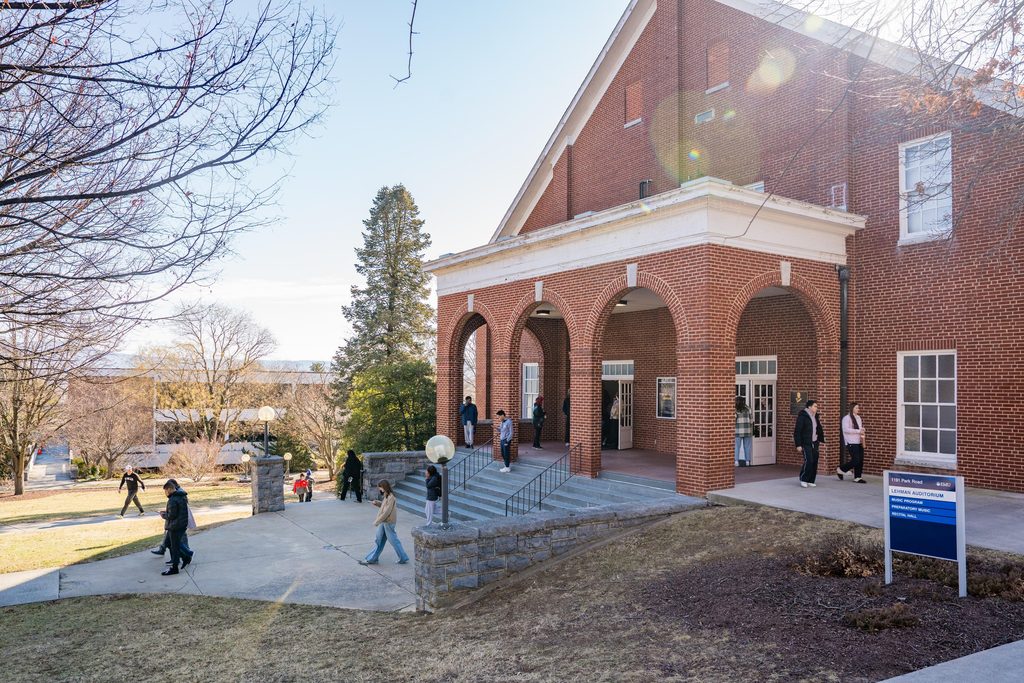
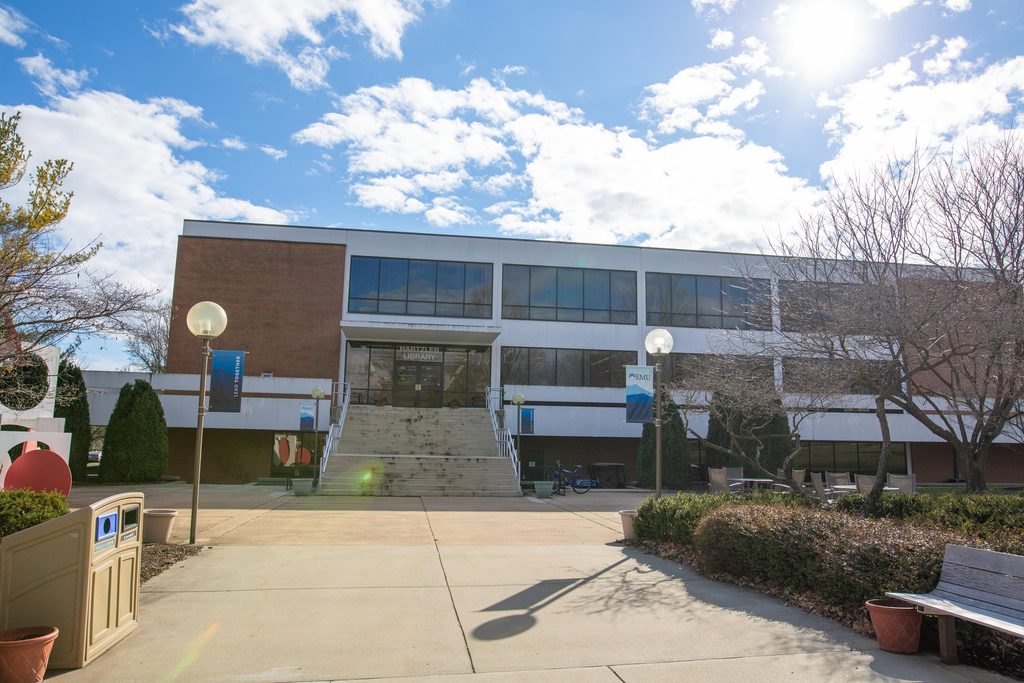
During Augsburger’s presidency, EMU built Suter Science Center (top) and Hartzler Library (above right) and renovated Lehman Auditorium (above left).
Beyond the new buildings, perhaps the most visible change on campus was the makeup of its student body. Augsburger was instrumental in drawing students from a wider variety of backgrounds, including those from other-than-Mennonite households. According to Kraybill, the percentage of other-than-Mennonite students attending EMU grew from 7% to 37% during Augsburger’s tenure.
“Kraybill argues that Augsburger really put EMU on the map as a reputable institution, and I would agree,” Horst said. “It moved from a real church school to one focused on how its values could serve larger swaths of students than just the Mennonite church.”
Dr. Fred Kniss ’79, EMU provost from 2009-23 and another nephew of Augsburger, described a fundamental change in the institution’s identity.
“EMU began shifting from being a sectarian, Mennonites-only university, a university that was intended to protect young Mennonite people, and became a university that was preparing Mennonites and others for engaging the world,” he said. “That was a significant cultural shift that he gets a lot of credit for helping make happen.”
Those changes were also reflected in the loosening of restrictions around EMU’s traditional dress code. In 1971, the school removed the requirement in its student handbook that women on campus wear head coverings.
“When I came in 1970, I don’t remember any faculty with short hair,” said Mary Kauffman, who taught home economics until 1975. “They all had long hair, wore a covering, wore no jewelry, wore no makeup, and I did all of that. And I was never questioned about it by anybody in my five years of teaching at EMU, which was sort of a really pleasant surprise.”
“I just went about my teaching and wore what I had worn before coming to Virginia, and Myron never approached me regarding any of that, which I really appreciated, because I could come and be who I was,” she said.
Another change to the dress code in the mid-1970s allowed women to wear pants on campus, while men were no longer expected to wear plain coats.
“We were getting out of being plain Mennonite,” said Dr. Joseph L. Lapp ’66, president of EMU from 1987-2003. “A bunch of newer faculty were not interested in maintaining that kind of dress. They would wear a sport coat without a tie and that was acceptable.”
Academic programs also expanded during Augsburger’s presidency. Led by Vida Swartzendruber Huber ’61, the nursing department “soon became a powerhouse on campus,” Kraybill writes. By 1975-76, nursing was the most popular major, claiming 22% of all majors and contributing to EMU’s recognition as “a center of innovative nursing education.”
The arts also gained a greater presence on campus, with Augsburger’s wife, Esther L. Kniss Augsburger ’72, playing a significant role. An art teacher, sculptor, and organizer for Christian artists, she helped pave the way for EMU’s art program and, in 1972, became the first student to graduate with an art major, receiving her diploma from her husband at Commencement that year.
The Esther K. Augsburger Art Center is named after her, and her sculptures can be found around campus, including the white Love Essence figures by the Seminary Building and the red Summer Ecstasy installation outside Northlawn.
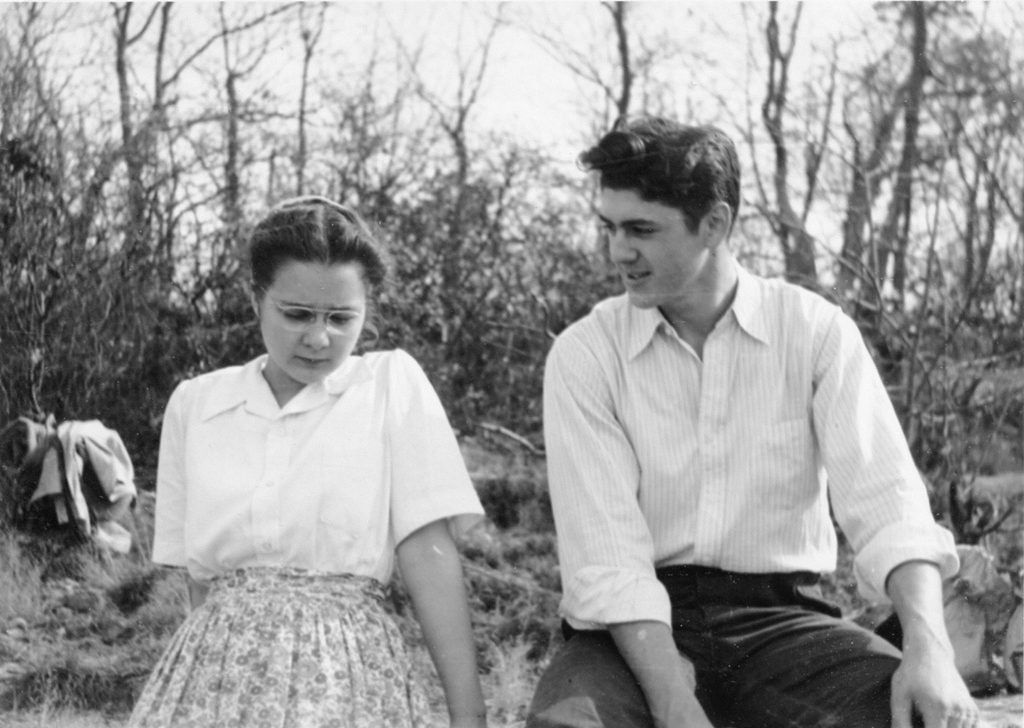
Myron Augsburger was also known for recognizing talent.
“He’d find these gifted people and persuade them to come to EMU,” said Owen Burkholder MDiv ’75, Augsburger’s nephew by marriage.
One of his early hires was Miriam “Mim” Mumaw ’61, a pioneering Hall of Honor coach, co-athletic director, and professor in the 1960s and ’70s. She coached the school’s first women’s intercollegiate athletic teams, including women’s basketball, volleyball, and field hockey.
“Myron was really good at cultivating leadership and identifying people who he felt would be in service to the university,” Horst said. “I think of him as having this really broad vision of what EMU could be.”
Engaging the wider world
While leading EMU through a period of profound social and political change, Augsburger brought a wide variety of renowned speakers to campus who exposed students to diverse perspectives. Among them were NBA legend Bill Russell, Roots author Alex Haley, and evangelists and racial justice advocates William Pannell and Tom Skinner.
“Mennonites have typically shied away from being too visible or too out there in the world, and Myron, through his evangelistic work, but also his sense that we needed to be actively involved in the world, helped EMU establish a visible presence in the larger academic community and bring a unique Anabaptist perspective on issues of the day,” Phil Kniss said. “I think he made the EMU campus less insular and more engaged with society and the world.”
Augsburger also formed close friendships with evangelist Billy Graham and Mark Hatfield, a Republican senator from Oregon from 1967-97 who spoke at EMU’s Commencement in 1968.
“A cute story is that Mark Hatfield gave him a desk,” Burkholder recalled. “When we moved him into the retirement community, why, we were moving Mark Hatfield’s desk in with him.”
The changes Augsburger championed were not without controversy. His decision to build the Discipleship Center atop the EMU Hill drew protests from students.
“Students didn’t want anything on the hill,” Horst said. “They wanted the money to be used elsewhere, but that’s how the gift was designated, so it was impossible to do anything else.”
Swartzendruber also recalled Augsburger “taking some hits” during the late 1960s for expressing concerns about the Vietnam War.
“That didn’t go over well with some local people, who early on were supportive of the war,” he said.
‘A genuine encourager’
Professor Emeritus Dr. Gerald Brunk ’59, who taught in EMU’s history department from 1965-2001, described Augsburger as “a brother-in-Christ” and “very good friend.”
“He offered me a promotion to full professor before I actually deserved it,” Brunk said. “I really appreciated that.”
Brunk recalled Augsburger’s inspiring and challenging messages in chapel.
“I remember him saying that we could be conservative theologically and liberal on social matters, and he demonstrated that, of course, in his own life,” Brunk said.
Swartzendruber recalled a similar statement that Augsburger frequently made: “Theologically, I am conservative, but politically, I am progressive because of how I understand what it means to be a follower of Jesus.”
“That’s an amazing statement, particularly in our polarized world now,” Swartzendruber said.
Lapp, who served on the EMU board for 12 years before becoming president, was a college senior when Augsburger was inaugurated and considered him “an important mentor.”
But he had known the evangelist well before his time as a student. As a young teenager, 13 years Augsburger’s junior, Lapp hitched a ride with him from his home in eastern Pennsylvania to the EMU campus.
“As we got closer to Harrisonburg, Myron got an electric shaver out of the glove compartment, plugged it into the cigarette lighter, and started shaving himself while driving, saying he had to get rid of his shadow before getting to campus,” Lapp said. “That’s a crazy thing to remember, but I was a young teenager learning from these people who were my seniors.”
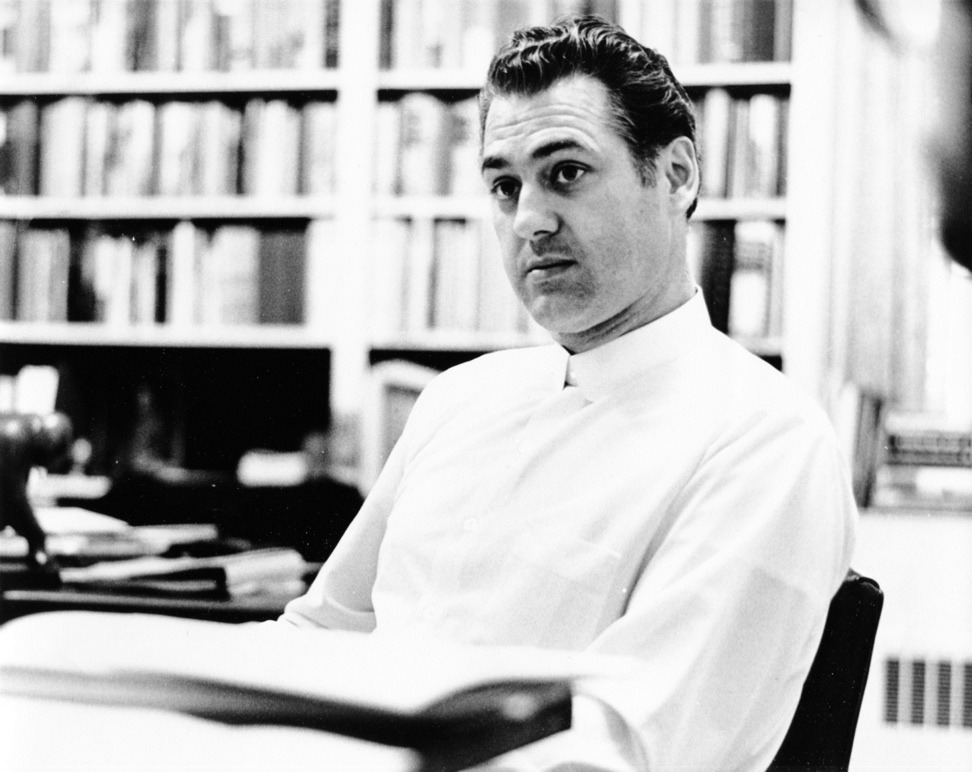
Burkholder, former pastor of Community Mennonite Church (1972-80) and Park View Mennonite Church (1981-96), churches that Augsburger helped establish, described him as “a genuine encourager.”
“He called people together and said, ‘Go do it,’ and would stay in the background and encourage whatever was happening,” he said. “He affirmed and encouraged and occasionally would correct.”
One of Augsburger’s characteristic expressions, Burkholder recalled, was, “I appreciate how you’re working at this.”
Phil Kniss, who pastored Park View for 28 years before retiring two years ago, said Augsburger attended his sermons and offered thoughtful feedback.
“I always found him to be extremely supportive and encouraging of my ministry,” he said.
The Rev. Dr. Michael King ’76, who served as EMU vice president and dean of Eastern Mennonite Seminary from 2010-17, said he would often walk past Augsburger’s house on his way to campus.
“Multiple times Myron and I would end up chatting,” King said. “He moved me with his unflagging words of support for me in my EMU roles.”
Early life and ministry
Augsburger was born on Aug. 20, 1929, in Elida, Ohio, one of six children of Clarence and Estella Augsburger. He pursued an extensive academic path, earning bachelor’s degrees from EMU, a master of divinity from Goshen Biblical Seminary, and a doctorate from Union Presbyterian Seminary in Richmond, Virginia.
He married Esther L. Kniss on Nov. 28, 1950, in Elida. They were married for 75 years and raised three children: John ’74, Michael ’80, and Marcia ’81.
The couple spent their early years of ministry in Sarasota, Florida, where they pastored Tuttle Avenue Mennonite Church. While there, Augsburger received an invitation from then-President John R. Mumaw to serve as campus pastor at EMU. He would serve in that position for six years and as professor of theology from 1963-80.
In 1965, at the age of 35 and having recently completed his doctorate, Augsburger was named the fifth president of EMU, becoming the youngest president in the institution’s history.
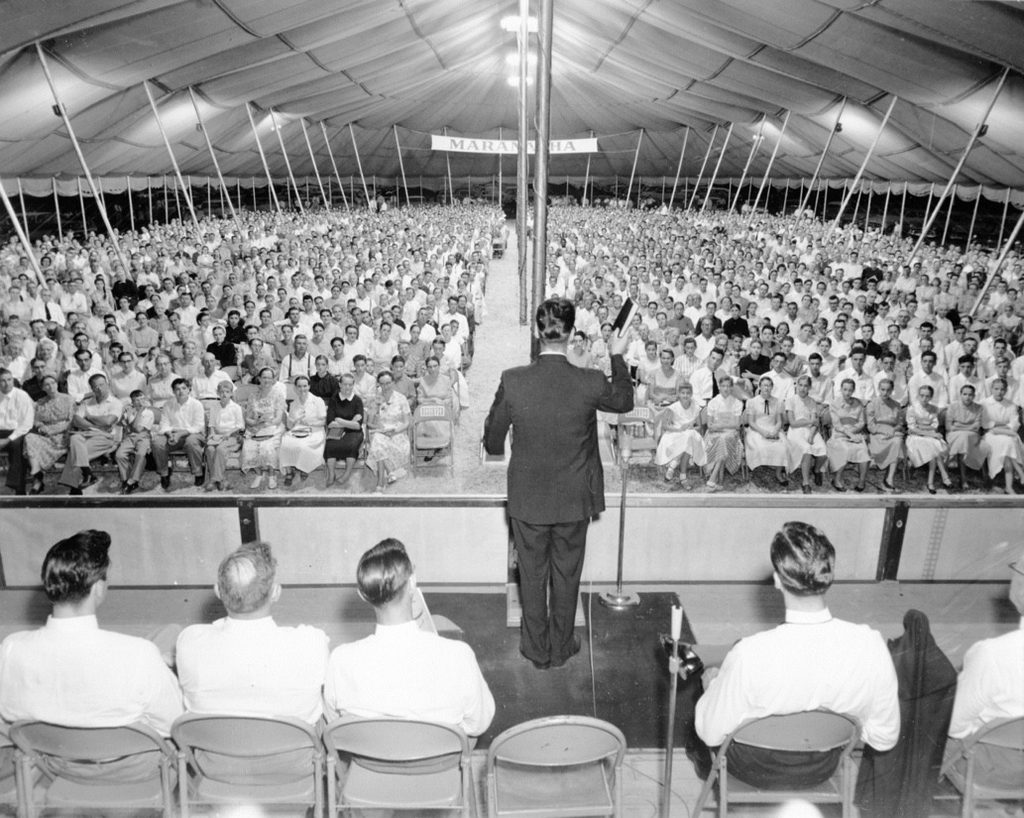
By the time he became president, he had conducted more than 50 community-wide crusades through InterChurch Inc., an organization he had founded. He continued preaching at revival meetings across North America, at times drawing as many as 7,000 people, until 1996.
In 1969, just four years after taking office, Time magazine named him one of the five most influential “preachers of an active gospel” in America.
“The atmosphere at the time was that there was something new coming,” Lapp said. “It was his presence. It was his speaking. I remember hearing students older than me talk about how, when Myron was speaking, they felt as if they were getting a new understanding of theology and Anabaptism.”
Post-presidency
After retiring from EMU, Augsburger served as founding president of the Christian College Coalition, now the Council for Christian Colleges and Universities, for seven years. He planted Washington Community Fellowship in Washington D.C.
Throughout his life, Augsburger wrote more than 20 books on theology, discipleship, peace, and church history. He served as moderator of the Mennonite Church General Assembly for two years.
Friends and family members recalled Augsburger’s good-natured humor, his apple butter-making gatherings, and his love for swans.
“He would be running errands for the college, but he’d have a couple swans in the trunk of his car that he was moving from one pond to another,” Fred Kniss said. “There’s a pair of swans on the pond at Massanetta Springs that are probably descendants of his original swans.”
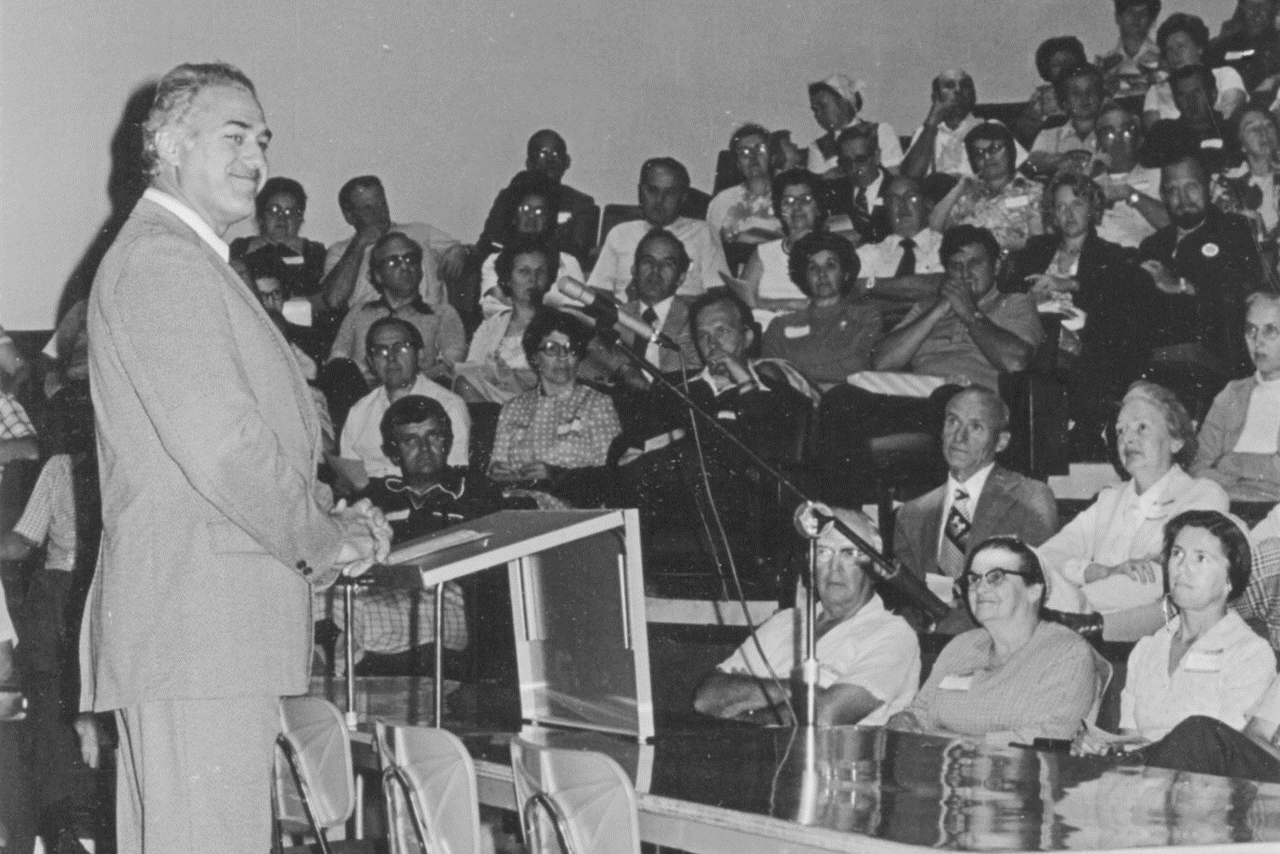
Fred Kniss described his uncle as a “larger-than-life figure in many ways.”
“His presence could fill up a room,” he said. “He was a great speaker, preacher, and thinker.”
Yet despite his national reputation and many accomplishments, family members recalled his attentiveness to those closest to him.
“I was proud to have an uncle who was as renowned and respected around the country as he was,” Phil Kniss said. “But, on a personal level, he always had time for us.”
Augsburger is survived by his wife, children John and Marcia, two granddaughters, sister Anna Mary Good, and many nephews and nieces. He was preceded in death by his son Michael, parents, and brothers Fred, Donald, Daniel, and David.
In his retirement, Phil Kniss gave Myron and Esther rides through campus on a trishaw he pedaled. Despite his uncle’s memory loss, he said Augsburger still recognized the campus and felt deeply connected to it.
“He recognized the place, the buildings, and it just felt like home to him,” Phil Kniss said. “He could tell it was a big part of his life.”
President Rev. Dr. Shannon W. Dycus, who began her term on July 1, said she is often inspired by stories of Augsburger’s chapel services and the encouragement he offered others.
“Decades after his presidency, Myron’s spirit of relationality, passionate vision, and steadfast faith remains woven into the fabric of EMU,” she said.
| Memories of Myron Hundreds of people shared their memories of Augsburger on Facebook, LinkedIn, and Instagram. Many former students recalled his sermons at chapel services in Lehman Auditorium. Julie Yoder first encountered the evangelist at a revival meeting in Hartville, Ohio, when she was a young child and said that his presidency was a factor in choosing to enroll at EMU. She recalled a prank during one of his sermons in which an open box of laundry detergent was dumped from the catwalk above the stage as he spoke. “He waited a bit and, if I recall correctly, made a comment about taking it as a need to ‘clean up my act,’” she wrote. “Cue everyone breathing again, laughter, and on he went.” Keith May, who served with Augsburger on the board of the Gandhi Center for Global Nonviolence at James Madison University, recalled a dinner event at VMRC where Augsburger had agreed to speak but had forgotten to prepare. “Myron grabbed the podium and gave an inspirational talk about service, kindness, and the value of VMRC,” May wrote. “It was an incredibly moving talk and it was at least 45 minutes. It all came out of his head and his heart!” Alumnus Dennis Gingerich ’76, MDiv ’79, recalled that once he started dating Augsburger’s niece, Linda ’77, he saw “an additional side of Uncle Myron.” “He was the same in front of a crowd of thousands as he was in a family gathering: Christ-honoring, compassionate, passionate, personable and authentic,” Gingerich wrote. Here is a selection of other tributes: • “I attended a crusade held in Freeman, South Dakota; it may have changed my life. He spoke clearly about the need of salvation and also affirmed Christian Mennonite values such as peace and justice. I had never heard that combination before—I never have abandoned those principles,” said Timothy M. Schellenberg. • “When I ran for a political office I listed Myron Augsburger as one of my heroes. I still remember some specific items he mentioned during some of his moving and informative chapel presentations. I hold him in high regard as a faithful church leader and servant of God,” said Daniel B. Grimes. • “When I was 10 years old, Myron came to Lancaster County for tent revivals. It was at one of those meetings that I gave my heart to Jesus,” said Lorri Good Cutrer. • “He was the reason I wanted to go to EMU. I heard him speak at Mellinger’s Mennonite Church [Lancaster County] when I was in high school. I had never heard such fluidity, range, and grace in a Mennonite public speaker,” said Shirley Showalter. • “He was my mentor, my friend, my encourager and a humble servant of God! I am who I am today in large part because of the investment that Dr. Myron Augsburger made in my life!” said Steve Wingfield of Wingfield Ministries. |
More about Myron
- A marriage of 70+ years: The late Jim Bishop reflects on Myron and Esther Augsburger’s 70th wedding anniversary in the Daily News-Record. Read the story.
- The Augsburger family legacy: A 2014 EMU News feature explores the lives and paths of the Augsburger children. Read the story.
- Reflections from former presidents: EMU presidents emeriti reminisce about their years of leadership. Read the story.
Join the Discussion on “In Memoriam: Dr. Myron S. Augsburger ‘put EMU on the map’”