A new South African chapter of EMU’s Summer Peacebuilding Institute (SPI) will bring conflict transformation, restorative justice, and trauma-awareness training closer to communities across Africa.
The initiative, developed through a partnership between EMU’s Center for Justice and Peacebuilding (CJP) and the Southern African Development and Reconstruction Agency (SADRA), will launch Jan. 5-15, 2027, with a 10-day conference at the University of the Western Cape in Cape Town, South Africa.
Since 2013, SADRA has worked to transform communities across Southern Africa through conflict transformation initiatives, training, and research. The organization partners with schools and universities, community and government leaders, pastors and churches, and traditional leaders to provide conflict mediation, peace training, capacity and team building, and interventions to issues such as school violence and xenophobic attacks.
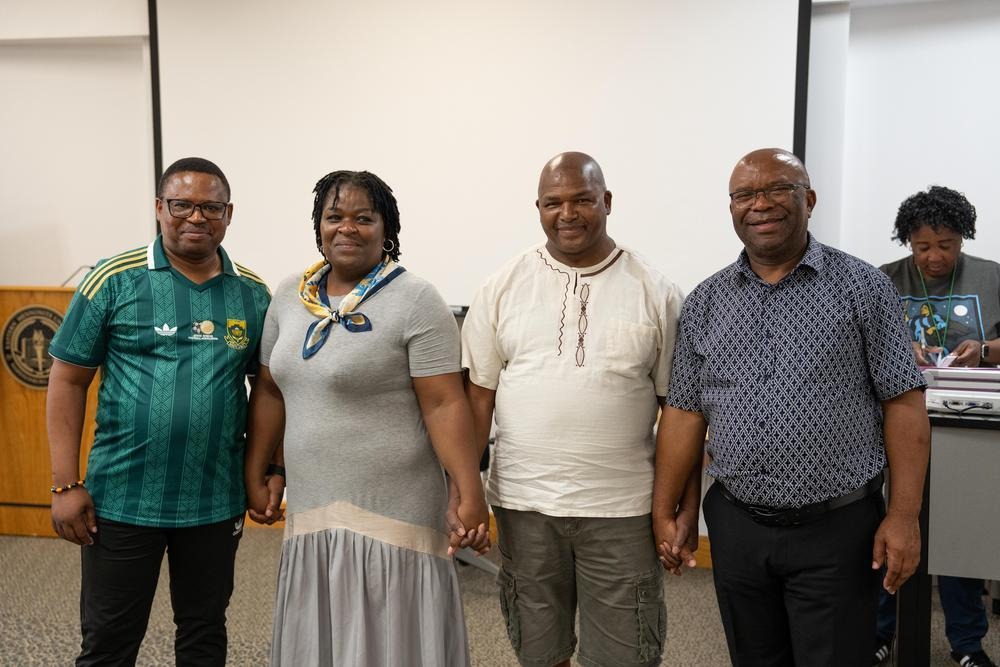
Four members of the Cape Town-based organization traveled to EMU this summer to participate in SPI 2026. Inspired by what they learned from experienced peacebuilders and conflict transformation practitioners from around the world, they are now helping bring those same lessons and principles to South Africa.
Among them was the Rev. Phumzile Stofile, a community mediation facilitator for SADRA, who said the collaboration comes at a critical time.
“South Africa is a deeply wounded and divided society, filled with anger,” he said, noting that parts of the country experience high levels of crime and violence, particularly against women. “That’s why we’re here, to learn from these models and adapt them for South Africa.”
Oscar Siwali MA ’20 (conflict transformation), a conflict resolution expert, peacebuilder, and the founder and director of SADRA, said the timing is right to expand peacebuilding efforts in South Africa and beyond.
“While the language of violence and war is being amplified, we need the language of peace,” he said.
The goal of SPI South Africa is not only to equip more people with skills in mediation, peacebuilding, and Strategies for Trauma Awareness & Resilience (STAR), but also to make those trainings more affordable and accessible. “This initiative opens the door for people,” Siwali said. “What was once prohibitively expensive will now become affordable.”
He added that the program will help develop a new generation of peacebuilders prepared to continue the work as current practitioners retire and leave the field.
Vuyokazi Luxande, another member of the South African delegation attending SPI this summer, said she is grateful for the partnership and its potential to strengthen restorative justice efforts across Southern Africa. “This partnership will go a long way,” she said. “It’s not just a one-off intervention.”
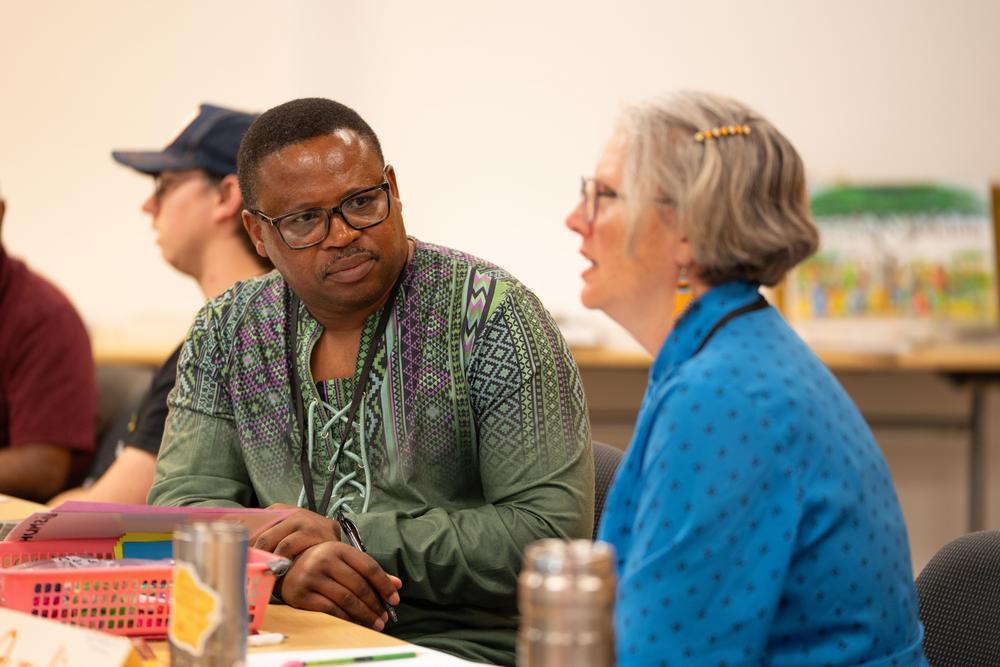
The South African chapter will also make SPI’s training more accessible to participants who face barriers to traveling to the United States.
Kory Schaeffer MA ’24 (conflict transformation), director of programs at CJP, said many prospective attendees have concerns about obtaining visas, navigating international travel, or affording increasingly expensive airfare. “Flights that were once $1,200 are now $3,000,” he said.
Last year, about half of SPI applicants faced a visa denial or insurmountable travel barrier. “We can’t expect everyone to come to us and take all those risks if we are serious about advocating for the work,” he said.
Hosting SPI programs in different regions of the world also preserves one of the institute’s greatest strengths: its practitioner-centered learning environment. “At SPI, participants aren’t just students,” Schaeffer said. “You can have a class of 10 to 20 people and at least half of them are practitioners from around the world who can share what’s worked and what hasn’t worked for them.”
For Stofile, SPI’s lessons are deeply personal. Born in prison to a mother incarcerated for selling “dagga,” an Afrikaans word for cannabis, Stofile later experienced the trauma of being forcibly removed from his home at age 5 because his family lived in an area that apartheid laws designated for another racial group.
He said he carried anger and unresolved trauma for much of his life. Through SPI, he found new ways to understand and process those experiences. “I’ve come to understand that if my trauma is not transformed, it can be transferred, and I think that is what we are experiencing in South Africa,” Stofile said.
The experience was so meaningful for him that he decided to enroll at CJP and pursue a master’s degree in conflict transformation. Now, as SPI prepares to launch in South Africa, he hopes others will have the same opportunity for healing and growth. “SPI coming to South Africa is a golden opportunity that we take with both hands,” he said. “We need the support it brings so we can empower our communities.”
Registration information is available at spisouthafrica.com.

Join the Discussion on “SPI South Africa program to launch in January”