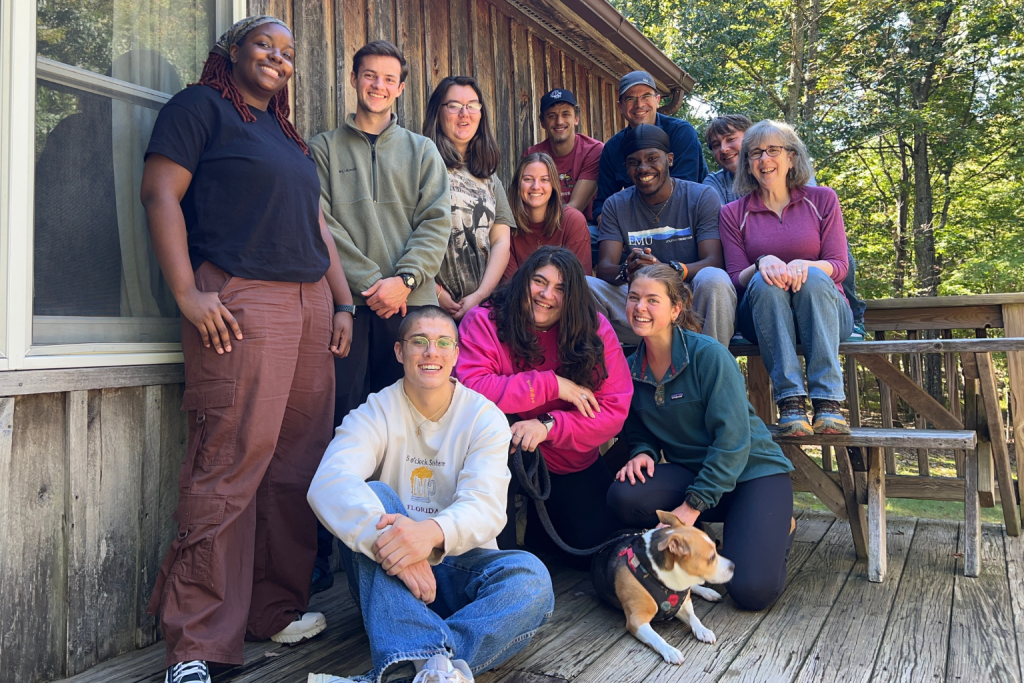
Rebranded EMU Washington Semester celebrates 50 years of career-building and community
WHEN ML LORMEJUSTE ’25 arrived at the Washington Community Scholars’ Center (WCSC) during the fall of 2024, he admits he wasn’t there to make friends. “I was just there to do what I needed to do and move on,” recalled the public health major. As the semester progressed, Lormejuste was nudged out of his comfort zone by social outings and group activities—and found himself forming close friendships with his eight housemates and discovering the value of community. Reflecting on that semester spent in Washington, DC, he said, “I love that group… They became a part of me.”
Lormejuste is one of more than 1,000 students whose lives have been transformed through EMU’s longest-running intercultural program, which is celebrating its 50th year of connecting students with internships, urban studies coursework, and shared community life. Launched in 1976, the program originally operated as the Washington Study-Service Year (WSSY) until 2002, when it was renamed Washington Community Scholars’ Center (WCSC) as part of a shift from a yearlong format to three shorter terms per year.
These transitions have allowed the program to stay relevant and responsive. Program staff spent the past two years gathering input for a new name from its alumni, EMU students, and campus faculty and staff stakeholders. In April, the Provost’s Council and President’s Cabinet approved rebranding the program to the EMU Washington Semester.
The EMU Washington Semester offers fall and spring semester terms and a 10-week summer session. It remains the only urban studies program among Anabaptist-affiliated institutions and draws students from schools across the country, including Bethel College, Bluffton University, Goshen College, and Viterbo University.
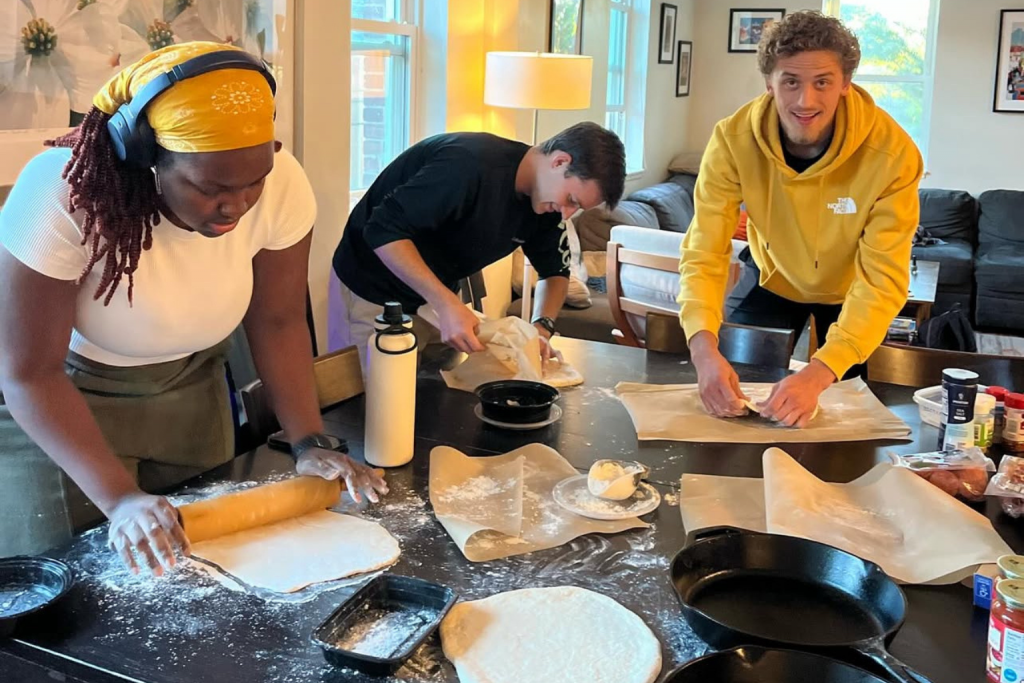
Living, learning, and launching careers
Up to 15 students in the EMU Washington Semester share cooking responsibilities, manage a collective food budget, and work together to maintain their home at the Nelson Good House in the Brookland neighborhood of Northeast DC. Alumni over the past five decades point to their experiences in the program as a highlight of their college careers, if not their lives.
“I never realized what a great program this was. I learned valuable lessons in adulting, from navigating a large city to living in community,” said Meredith Lehman ’25, EMU’s first Rhodes Scholar.
Like many students, her internship paved the way to a future career opportunity. She interned at the Institute for Policy Studies this spring and returned to DC over the summer to work as a fellow at the progressive think tank. “Everyone should do this program, no matter their major,” said Lehman, who double majored in political science and biology.
Cynthia Lapp ’86, a music education graduate and pastor at Hyattsville Mennonite Church in Maryland, has benefited from the program in multiple ways. She was a student from 1983 to 1984, later served on staff for four years, and continues to support program interns at her church. Many of those interns have gone on to become pastors themselves.
Lapp said her internship at Elizabeth Seton High School opened the door to a teaching position after college. She added that the program is especially meaningful for students new to community living. “Surrounding ourselves with people from different cultures and backgrounds helps us see beyond the way we think and live, including how our decisions impact those around us.”
Some students find their perfect match through the program—not just professionally, but romantically. Alumnus Micah Shristi ’00, an English major who now works as director of International Student Services at EMU, met his wife, Charlotte Gingerich Shristi, a Goshen College alumna, while in the program from 1998 to 1999. Many of his housemates from that year are among his closest friends, including Nathan Musselman ’00, who now lives next door.
“What’s wild is that there’s another couple from our year,” he said. “Jenelle Hershey ’99 and Keith Hoover ’00 also got married after their time together in the program.”
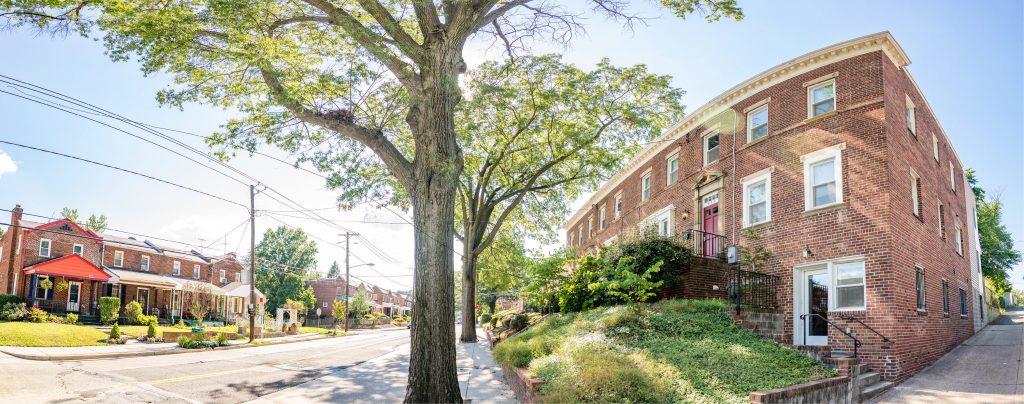
A ‘Good’ start
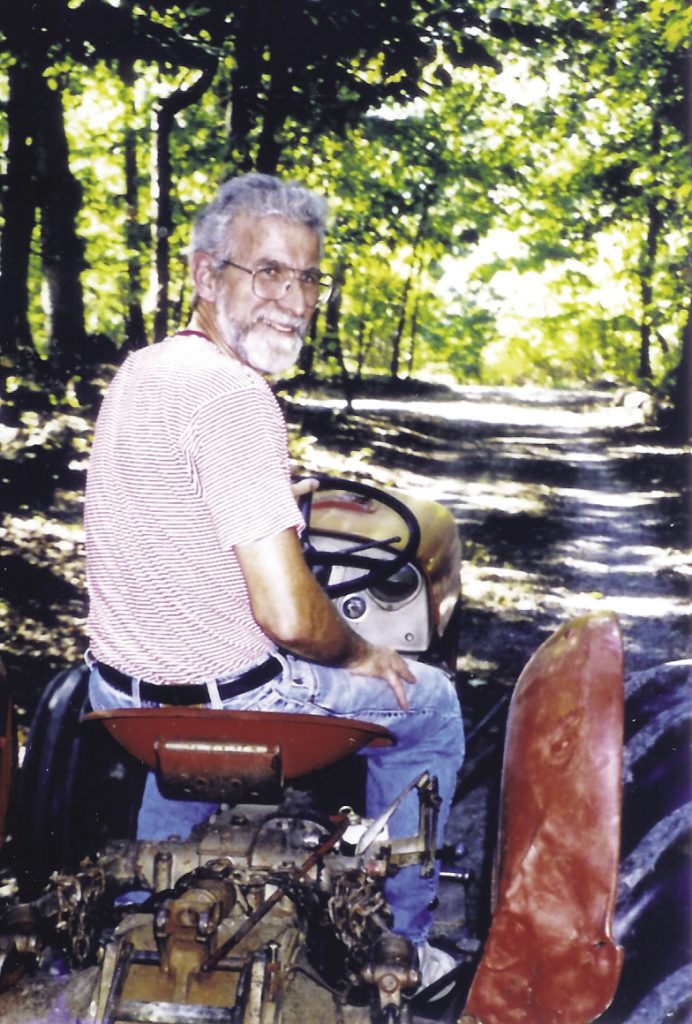
In the fall of 1976, a scrappy academic program began immersing students in the cultured community of the nation’s capital. Nelson Good ’68, who came to DC as a conscientious objector during the Vietnam War, founded and directed the program until his retirement in 1987.
The program, like the city around it, has seen plenty of changes. From the shift to three shorter terms and an accompanying name change in 2002 to a 2005 move from South Dakota Avenue to its current location on Taylor Street, the program has continued to evolve to meet the needs of its students and an ever-changing higher education landscape.
“The new name more clearly communicates the program as a university-run academic offering, is grounded in the context of our nation’s capital, and is easy to remember and say. It also aligns with common naming conventions used by other universities’ DC-based programs, making it more recognizable regionally and beyond,” said Ryan Good, EMU Washington Semester director and son of the late Nelson Good.
While evolving, the program has remained committed to supporting students’ personal and career development. Students consistently report leaving the program with improved professional confidence, greater clarity about career direction, more comfort in working with people who are different than they are, and increased awareness of systemic injustices, said Good.
“Dad would be thrilled to see the ways this program has evolved over the years. Though much has changed, the bones of the program he envisioned remain the same… supporting students as they make sense of who they are in a complex world, both personally and professionally.”
Two events will celebrate the program’s 50th anniversary: a reunion during Homecoming 2025 on Saturday, Oct. 11, from 1-3 p.m. in the Student Union, and a spring gathering at the Nelson Good House on Saturday, Feb. 21, from 10 a.m. to noon.
For more information about the EMU Washington Semester, visit: emu.edu/washington
This story appears in the Summer 2025 issue of Crossroads magazine.
Join the Discussion on “New name, same ‘great program’ ”