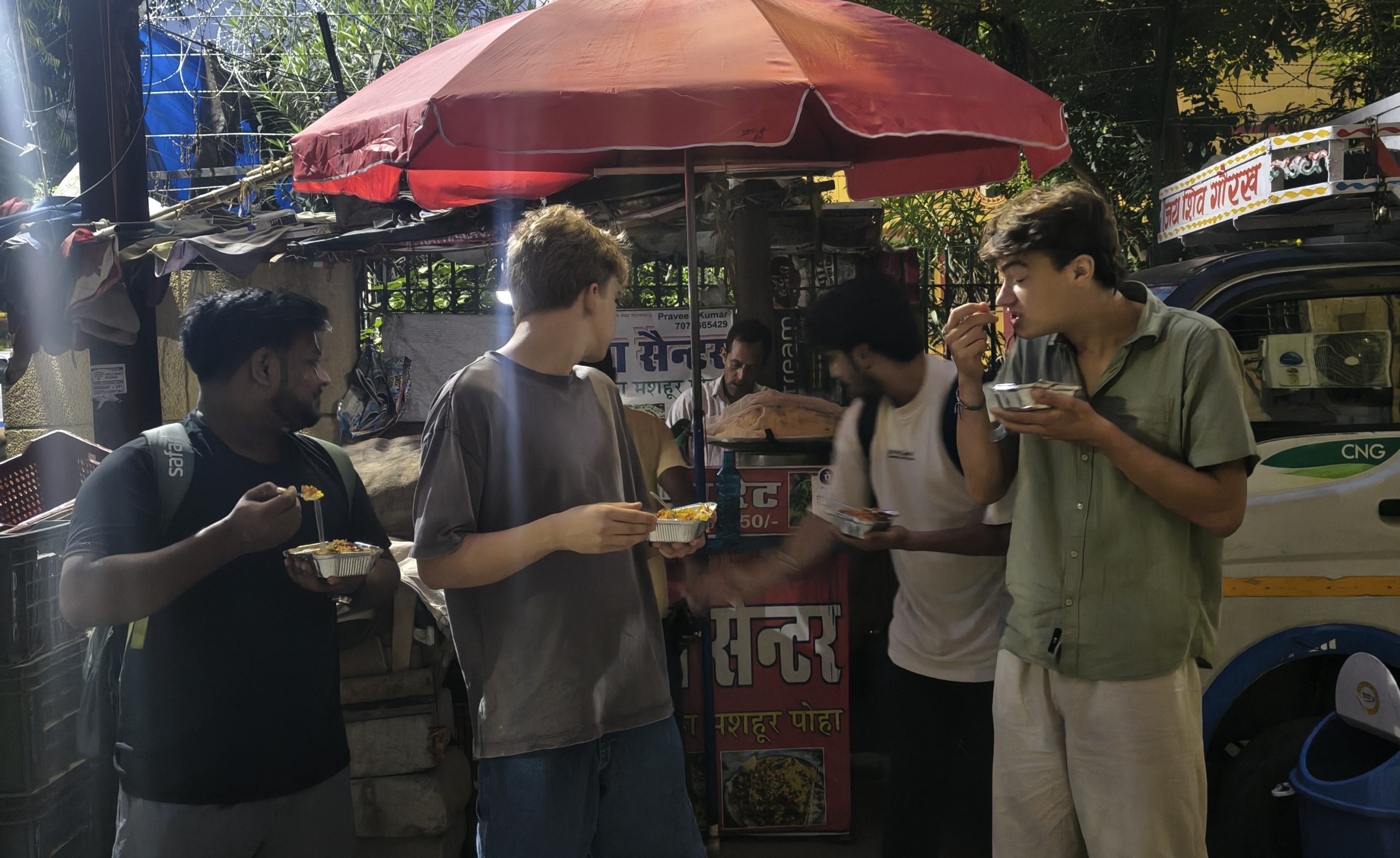
Our group has been studying in India for about a month and a half, and one of the most impactful experiences for me so far has been my encounter with India’s healthcare system.
A few days after eating a questionable breakfast with some university students in Delhi, I woke up in the night with a sharp pain when swallowing and a feeling that my throat was closing up. I went back to sleep for a few hours, but by 3:00 AM breathing had become noticeably more difficult so I called Mary and Gaurav. After researching the symptoms, we decided to drive to a government hospital near our hotel in the city of Lucknow. Getting out of the Uber, we saw a crowded waiting area where people were sleeping outside on the ground and across chairs. Walking inside the emergency department, we entered a long open room with a sea of patients receiving or waiting for treatment on black stretchers. Every stretcher was pushed against another, leaving only a narrow walkway down the middle of the room. I was waved over to a desk in the corner where a woman checked my vitals, then to a larger desk in the middle of the room where we described my symptoms and someone listened to my breathing. They said it was an infection, mentioned tonsils, and wrote down some antibiotics we should get. To help with my breathing they recommended a nebulizer so Gaurav got a stretcher from outside, still containing some small pools of unknown fluid, and filed it in among the other stretchers in the room. I laid on the stretcher, breathing through the machine for a few minutes until a doctor came over and told me it was done.
 We left within an hour of getting there, and my treatment was completely free. I was grateful for the quick treatment and impressed by how efficiently resources were being used but it was clear that the doctors were struggling to keep up with the demand. Gaurav said we were lucky doctors were there at all. Treatment at government hospitals is often inconsistent and those that can afford it often go to private hospitals for the guarantee of care and proper sanitation.
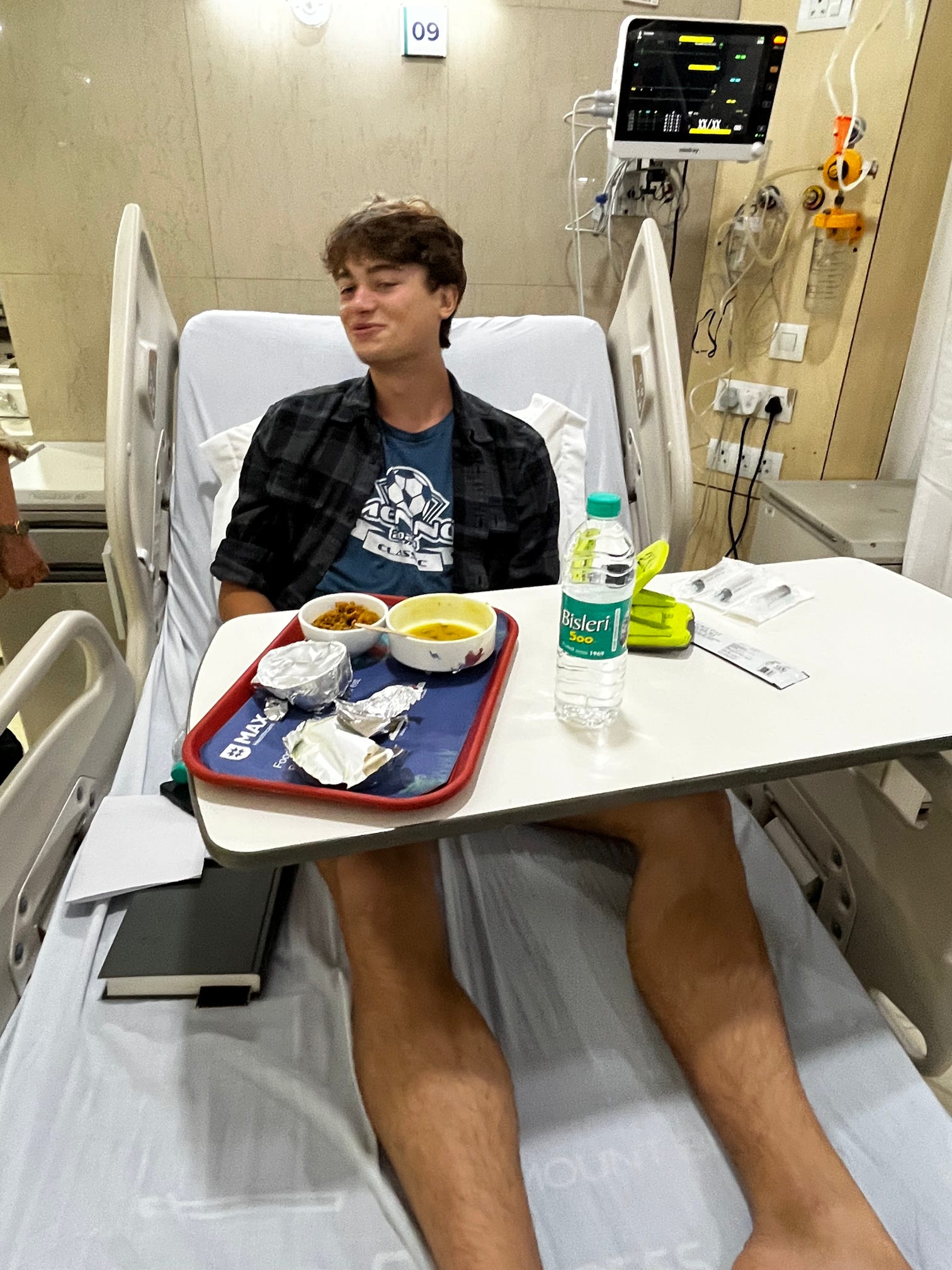
A night later, after the infection progressed, I got the chance to visit a private hospital, and I was amazed by the contrasts. Walking through the doors felt like entering a mall. We passed huge black pillars connecting the polished marble floors to the glass ceiling stories above. After walking down many well-lit hallways I waited on a bed with clean sheets and electric buttons while the doctors did various scans and tests to determine I had acute tonsillitis (a bad tonsil infection).
These contrasts represent a theme we have seen throughout our time in India. Luxury hotels overlook settlements under bridges and people beg for food outside malls with golden chandeliers. We have had a few discussions about caste and other factors that play into this disparity but the simplified version is that in a world with limited resources, the rich make the poor, and there can’t be great wealth without great poverty. On a macro level, the British couldn’t have the wealth they have today without the 45 trillion dollars they funneled out of India (Caroline Elkins, Legacy of Violence). On the micro level, our communities in the U.S. might not be able to afford intercultural study abroad or three-story houses without some help from cheap labor from India and other developing countries.
In reality, these issues are much more complicated, but throughout this trip I have continued to think about what I should do with the privilege that allows me to come to India and move freely between government and private hospitals for my healthcare.
-Adam Rhodes
